
Photo release - Continued education
General
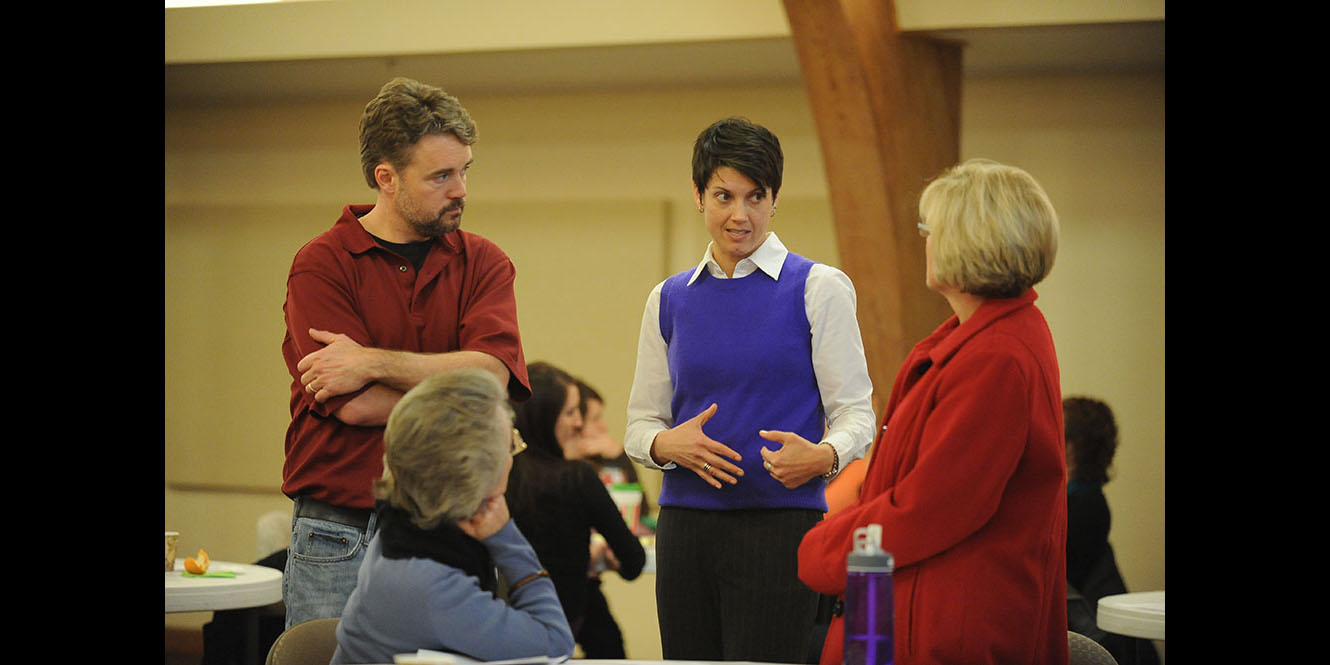
Ashley Finley, Senior Director of Assessment and Research for the Association of American Colleges and Universities, the leading national association concerned with the quality of undergraduate liberal education, was on the Hesston College campus Jan. 9 for a faculty in-service. The faculty spent the day discussing how to evaluate student learning on the newly revised Hesston College Outcomes and how to develop essential assignments for learning. Hesston College instructors use indirect assessment tools regularly to see how the college measures up on benchmarks and identify places for improvement. “Washington Monthly” magazine used results from the 2009 Community College Survey of Student Engagement and graduation rates to name Hesston College the number 2 two-year college in the country in 2010. Hesston conducts the CCSSE every three years. Pictured from front left are Maria Day, Spanish instructor; David LeVan, business instructor; Finley; and Tami Keim, Education instructor.
Hesston College to honor Martin Luther King Jr. as servant to humanity
General
The life and work of Dr. Martin Luther King Jr. will be honored with a week of events at Hesston College Jan. 15 to 20.
The week’s events will highlight Dr. King’s emphasis on service to all people. All events are free and open to the public.
“It is good to focus on the memory of King and the service he provided to millions of people,” said Dwight Roth, event co-coordinator and director of the Lifelong Education Aging Development program.
Events during the week include a concert by African-Americans Renewing Interest in Spirituals Ensemble (ARISE) of Wichita at 7 p.m. Sunday, Jan. 15 in the Hesston Mennonite Church Community Center. A reception will follow the concert.
One of Dr. King’s sermons, “The Drum Major Instinct,” will be the focus of chapel Monday, Jan. 16 at 11 a.m. in the Hesston Mennonite Church sanctuary. The service will include a short viewing of “Following the Drum Major,” which is based on the sermon. Sophomore Aaron Young of Kansas City, Mo., will perform some of his original music.
“Dr. King’s philosophy of service is best captured in ‘The Drum Major Instinct’ when he declared he wanted to be known as a person who tried to help others,” said Maria Day, event co-coordinator and Spanish instructor. “Service is central to the life and teachings of Christ, as well as to the Hesston College Mission Statement.”
Marion Bontrager, Bible and Ministry instructor, and Lorna Harder, biology instructor, will lead a viewing and discussion of King’s Vietnam War speech “Beyond Vietnam: A Time to Break Silence” at 7 p.m., Tuesday, Jan. 17 in the Hesston Mennonite Church Community Center. The speech is one of King’s lesser-known speeches, but serves an important role for people interested in peacemaking.
Education instructor Marissa King will share about her experiences with service in Guatemala and Phoenix during chapel at 11 a.m. Wednesday, Jan. 18 in the Hesston Mennonite Church sanctuary.
On Thursday, Jan. 19, the campus community will have a Service Day with an opportunity to serve residents at Schowalter Villa in various ways.
A panel of alumni speakers will share their experiences with service during chapel forum at 11 a.m. Friday, Jan. 20 in Kropf Center 150.
Students, faculty and staff will read poetry and perform music during a coffee house at 9 p.m. Jan. 20 in the Larks Nest.
Unexpected estate gift to build Hesston College endowment
General
Hesston College is one of six Mennonite and Mennonite Brethren organizations, including four higher education institutions, to receive a generous estate gift from Gunther Henry Schmitt, a doctor from San Bernadino, Calif., who passed away August 2.
Dr. Schmitt’s estate was left to Mennonite Brethren Foundation to be divided equally among the institutions and organizations. Hesston will use the more than $400,000 gift to build the college’s endowment. The endowment fund helps ensure the long-time financial health of the college and its programs.
Dr. Schmitt, who worked as a pharmacologist, internal medicine doctor and radiologist left no family and had no ties to Hesston College. His family was helped financially by Mennonite church agencies during World War II, and his gift to the college was a way of giving back to those who had helped during a time of need.
“We are grateful to Gunther Schmitt and to the Mennonite Brethren Foundation for the welcome and unexpected gift,” said President Howard Keim. “We are thankful that our current financial situation is such that we can use this gift for the long-term benefit of the college. We give thanks for people like Dr. Schmitt, who place a high value on institutions of faith-based higher education.”
Hesston-Bethel Performing Arts presents musical comedy sensation
Music
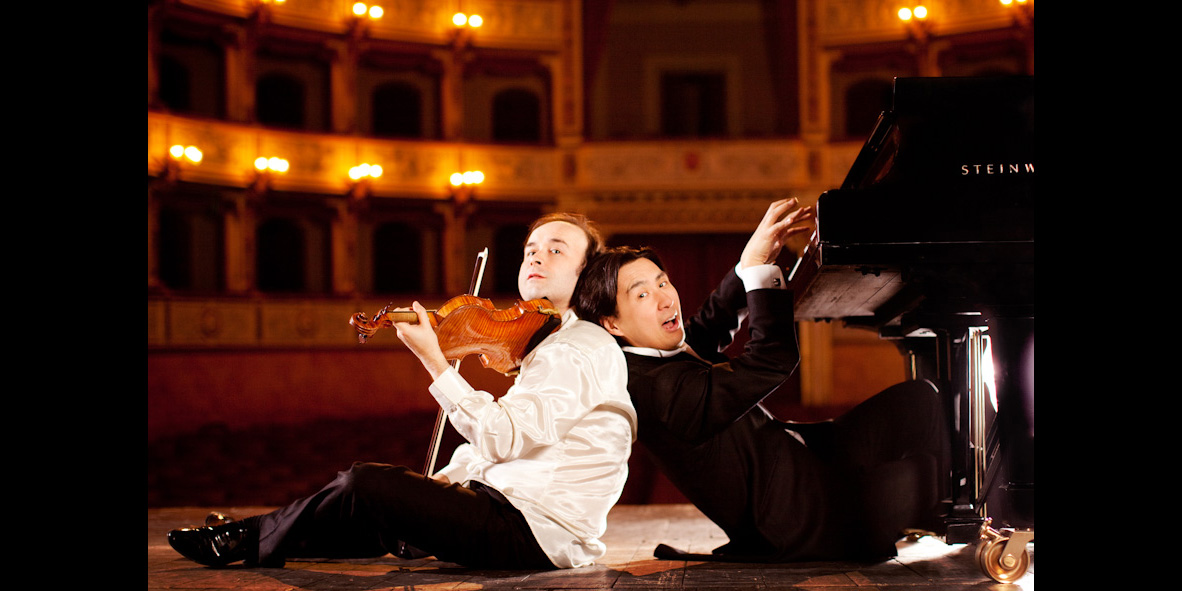
The third Hesston-Bethel Performing Arts event of the 2011-12 season will feature the unique collaborative duo of Igudesman & Joo with their groundbreaking show “A Little Nightmare Music.” The concert will be at 7:30 p.m. Tuesday, Jan. 31 in the Hesston Mennonite Church sanctuary on the Hesston College campus.
The duo, made up of Aleksey Igudesman on violin and Hyung-ki Joo on piano, are classical musicians who have taken the world by storm with their unique and hilarious theatrical shows, which combine comedy with classical music and popular culture. Collectively, their clips on YouTube have gathered more than 15 million hits, and they have appeared on live television in several countries, including an exclusive interview for CNN.
“Igudesman & Joo has become an international sensation in large part thanks to their sidesplitting YouTube videos in the tradition of Victor Borge and Peter Shickele – world class musicians with a brilliant sense of comic timing,” said HBPA director Matthew Schloneger.
Igudesman & Joo both attended the Yehudi Menuhin School for musically gifted children in Cobham, Surrey, United Kingdom, where they met at the age of 12. They created “A Little Nightmare Music” in 2004, which premiered at the Vienna Musikverein. Since then, they have performed the show worldwide as a duo and also with major symphony orchestras in “Big Nightmare Music” as they make classical music accessible to a wider and younger audience. They have been joined in their sketches several times by many of classical music’s biggest names, including Emanuel Ax, Janine Jansen, Gidon Kremer, Mischa Maisky, Viktoria Mullova and Julian Rachlin.
The duo has collaborated with actor Roger Moore on several occasions for UNICEF. They also performed Igudesman’s original sketch “The Music Critic,” a collage of some of the most critical classical music critiques of the last centuries with actor John Malkovich playing the role of the critic.
Individually, Igudesman has worked with musicians ranging from Academy Award winning composer Hans Zimmer to multi-Grammy Award winning vocalist Bobby McFerrin. He studied violin with Boris Kuschnir at the Vienna Conservatoire before beginning a career performing, arranging and composing for his string trio, “Trilogy.”
Joo has worked with Academy Award winning composer Vangelis and was chosen by Rock and Roll legend Billy Joel to arrange and record Joel’s classical compositions, which reached number one on the Billboard charts. Joo began playing piano at the age of eight and studied with Nina Svetlanova, Richard Goode and Oleg Maisenberg at the Manhattan (New York) School of Music. In 2001 he founded the piano trio “Dimension” with Rafal Payne and Thomas Carroll. He also developed a personal style workshop, entitled “The Inner and Outer ***** for a Musician,” which aims to encourage young musicians to experience music and life from a different perspective.
“The duo just celebrated the New Year with a performance at the Vienna Konzerthaus, and will be performing in Germany, London and Switzerland this spring in addition to their U.S. tour,” said Schloneger. “We’re thrilled to be hosting them for their first appearance in Kansas.”
Remaining concerts in the Hesston-Bethel Performing Arts series include traditional Irish music and dance rhythms with the highly acclaimed Celtic Crossroads and ancient choral music by Rose Ensemble. Visit www.hesston.edu/hbpa for dates and times.
Single ticket prices for Igudesman & Joo range from $15 to $18 depending on seating section, with discounts available for students and senior citizens.
For more information or to purchase tickets, call 620-327-8158 (Hesston College) or 316-284-5205 (Bethel College), email hbpa@hesston.edu or visit the HBPA website at www.hesston.edu/hbpa.
This program is presented in part by the cities of Hesston and North Newton, with generous underwriting by area patrons.
The Hesston-Bethel Performing Arts Series, now in its 30th year, started in 1982 as the Hesston Performing Arts Series (HPA) with funding and planning provided by Hesston College and the Hesston community. In 1998, HPA planners launched a partnership with Bethel College (North Newton) and the name changed to Hesston-Bethel Performing Arts. Hesston College and Bethel College host five performances by world-renowned or regionally acclaimed artists each year.
Hesston College offers course to community during spring 2012 semester
Bible and Ministry
The Hesston College Bible Department is offering a three-weekend course on Psalms and Epistles during the spring 2012 semester. Church leaders, those with an interest in ministry and any other interested people are invited to participate.
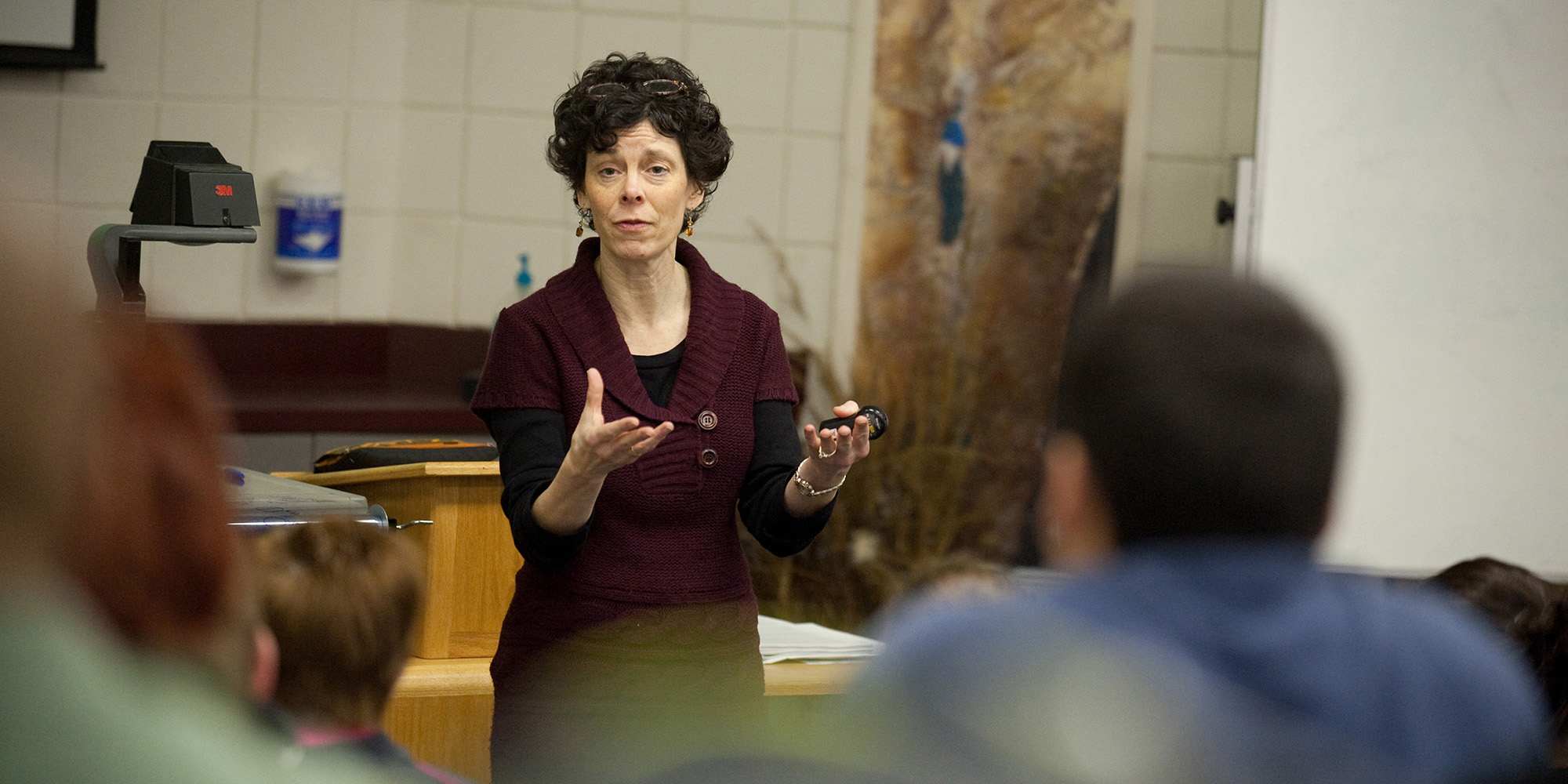
The class, taught by Bible and Ministry faculty member Michele Hershberger, focuses on the books of Psalms and 1 Corinthians, and Paul’s letters over three weekends – Jan. 27 to 29, Feb. 17 to 19 and March 16 to 18. Participants can earn three course hours.
“This class is an excellent opportunity for pastors and lay leaders to have an enrichment course and be reenergized,” said Hershberger. “We hope offering the course over three weekends is a more accessible way for interested people to travel from a distance.”
The first weekend, Jan. 27 to 29, will focus on the book of Psalms. The second weekend, Feb. 17 to 19, will center on Paul’s letters to the churches and will explore the biblical themes and epistle genre in general. The third weekend, March 16 to 18, will be a verse-by-verse study of the book of 1 Corinthians, a book that deals heavily with conflict in the church.
Participants will learn the cultural and historical background of the books, and how to identify literary cues for interpretation to glean preaching topics and enhance worship. Hershberger will use a variety of teaching styles to present and explain the course material, including lectures, small group discussions, drama and literary work.
“Psalms and Epistles seem very different, but when you study them together, you begin to see emerging themes,” said Hershberger.
Hershberger teaches a semester-long Psalms and Epistles class every other year for Hesston College students, and is excited to share that course material with the wider community and church.
Hesston College offers a variety of degree and transfer options in Bible and Ministry, including two-year degrees in Bible and Religion, Pastoral Ministries and Youth Ministry.
For more information including pricing for the course, or to register, call the Bible Office at 620-327-8290. An audit option for the course is also available. Scholarships and grants are available for students considering the Pastoral Ministries program.
Go everywhere, remember the start
General
“Start Here, Go Everywhere” is more than just a tagline for Hesston College. It is a prediction, a promise and a reality for the students who make Hesston their starting place.
Students scatter across the globe after two years at Hesston. Some accept service assignments while others begin careers with their associate degree in nursing, business, early childhood education, pastoral ministries, aviation and air traffic control. However, the majority of students transfer to another school to finish their education and secure a four-year degree.
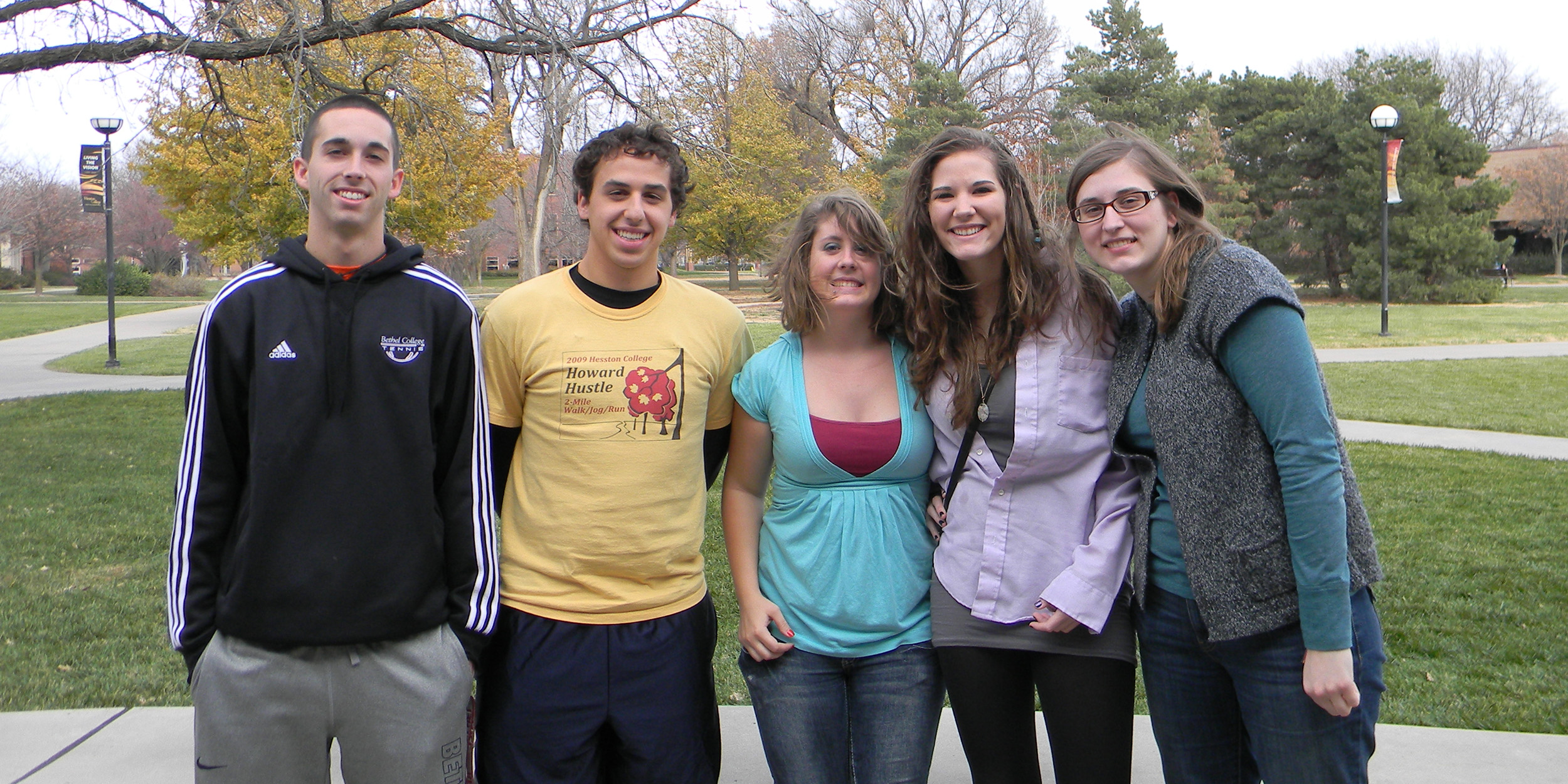
For 2011 graduates Chelsey Alden, Santa Fe (N.M.) University of Art and Design; Jenny Carter, University of Missouri – Kansas City; Jennifer Kaberline, Central Christian College (McPherson, Kan.); David Tedone, Bethel College (North Newton, Kan.) and Ryan Wengerd, Goshen (Ind.) College; transferring from Hesston College was a smooth and stress-free experience.
Transferring credit hours, finding a niche and rebuilding a social life at a new place ranked among the students’ top concerns as they thought about the transfer process, but their fears were quickly put to rest.
Hesston administrators and academic advisors make a concerted effort to prepare students with credits that transfer smoothly. Articulation agreements are in place with 11 colleges and universities across the country, including the four other institutions that fall under the Mennonite Church USA umbrella, six local Kansas private institutions and one in Pennsylvania, to make a seamless transition for students.
“We have found most four-year colleges and universities to be very helpful when we inquire with our specific course selection questions,” said Deb Roth, who works with Student Success and coordinates the advising program. “It is helpful to know of a student’s transfer plans as early as possible so advisors can help them make the right choices in terms of general education courses as well as courses specific to their major. Advisors also remind students to contact us when and if a certain course does not seem to transfer easily so the registrar may intervene if necessary.”
For Tedone and Wengerd, articulation agreements between Hesston and their new schools meant all their course credits would transfer with no problem. All of Alden, Carter and Kaberline’s credits transferred with minimal discrepancies as well.
“One of the reasons I chose Bethel was because all of my credits would transfer,” said Tedone.
Besides formal agreements with other institutions, Hesston also works to fully prepare students for their future transfer during their first two years. Academic advising moved to a model that requires first-year students meet with their faculty advisor on a weekly basis for the first eight weeks of class. The intentional arrangement helps the advisor gain a focused picture of the student’s academic and career goals and recommend classes that will be most beneficial upon transferring.
“Academic advisors are continually updating their files of transfer requirements for institutions in which students commonly transfer,” said Roth. “Many departments have done transfer audits as a way to review how Hesston courses are transferring and what additional courses we might offer to prepare students for their next academic steps.”
The students noted that the relationships they built with professors both in and out of the classroom and the educational opportunities offered helped prepare them for the challenges of upper-level undergraduate courses.
“I knew classes that were geared specifically toward my social work major were going to be tough at Bethel and I have been challenged,” said Tedone. “But I had challenging classes at Hesston that prepared me and gave me confidence to move into my major.”
“Hesston has well rounded classes and educational experiences,” said Alden. “My professors helped me line up an internship with the Wichita (Kan.) Public Library as an editor for their news column the summer after my freshman year. That experience allowed me to move directly into more advanced classes at Santa Fe.”
Of course, adjusting to a new environment means hurdles to overcome and anxiety that comes with leaving behind friends and familiarity. While they acknowledge moments of uncertainty, the students found that a little effort can go a long way.
“I wasn’t worried about transferring,” said Wengerd. “I already knew people at Goshen and other Hesston College students transfered there with me. After about a week I realized I was going to have to put forth an effort if I wanted to get to know new people as well. I just kept getting out of my apartment and meeting people. It’s been a great experience.”
“UMKC is a totally different environment than Hesston,” said Carter. “I live in campus apartments, but getting to know people is difficult – it’s just hard to know where to start. Hesston’s small population and the way they do community makes meeting people so natural and simple.”
The students anticipated differences in their new communities, and being prepared for something new helped to ease the transition.
“Santa Fe doesn’t have the same relational atmosphere that Hesston does,” said Alden. “The professors are quick to help, but in most cases, it is more of a strictly business approach. I miss the friendships I had with many of my professors at Hesston, but I am also happy where I am. I identify with the students, and it’s a great fit for me to pursue my passion of creative writing.”
Even though they can no longer claim Hesston as their “home away from home,” the students maintain a connection – both physical and emotional – with the place that started them on their future paths. They stay in touch with classmates, dorm friends, teammates, faculty and staff to remember the community they built in south-central Kansas.
“I miss being able to drop into my professors’ offices to talk about problems and celebrate triumphs,” said Kaberline. “When I come back to visit, people still stop to talk and it’s kind of like I never left.”
Hesston College musicians to perform in Iowa
Music
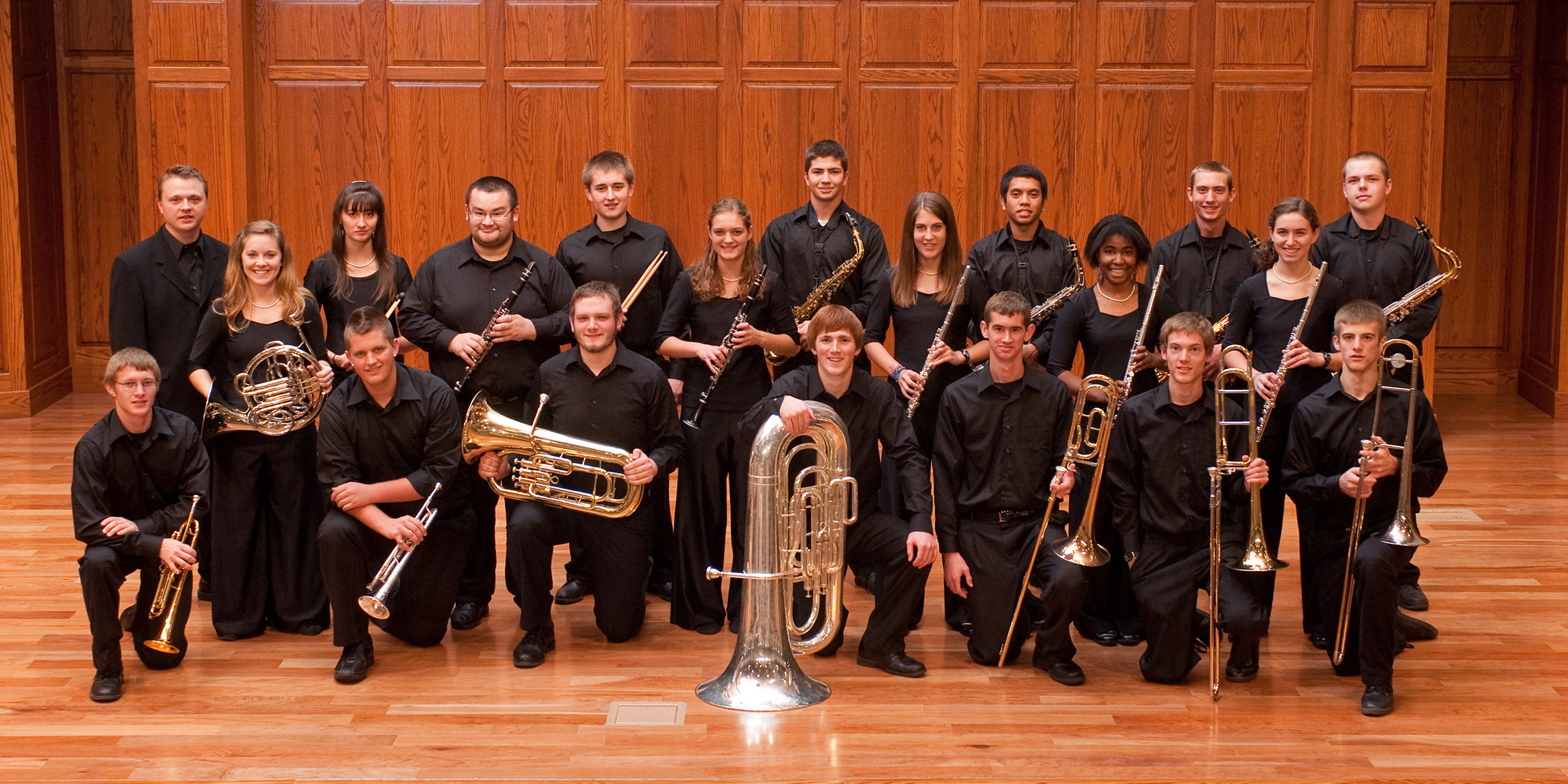
he Hesston College Concert Band and Bel Canto Singers will present separate Iowa performances Sunday, Jan. 15. Bel Canto will present a program of sacred choral music during the 9:30 a.m. service at First Mennonite Church of Iowa City. The Concert Band will perform with the Iowa Mennonite School (Kalona) Symphonic Band at 2 p.m. in IMS’s Celebration Hall. Both concerts are free and open to the public. Hesston College alumni and friends are particularly invited to attend.
The 22-member Hesston College Concert Band directed by Bradley Kauffman and 21-member IMS Symphonic Band conducted by Karenza Yoder, will present “Collaborations,” under the direction of Kauffman. The concert features band selections by George Gershwin, Leonard Bernstein, and Percy Grainger, as well as solo performances by Hesston College students.
The concert marks a homecoming for Kauffman who began his teaching career at IMS 15 years ago. He is in his fifth year as a music faculty member at Hesston College.
“Music is nothing if not a collaboration,” said Kauffman. “We cultivate collaboration among musicians and we engage audiences in a relationship as well. The give and take of music-making can teach us how to have mature conversations.”
Bel Canto, also under the direction of Kauffman, is a 21-voice mixed chamber choir selected by competitive auditions during the 2010-11 school year. Their Sunday morning concert is entitled “Attributes, Actions and Adulation.”
“The set of pieces explores God’s attributes and actions, and the adulation God’s people pour out in response,” said Kauffman.
General
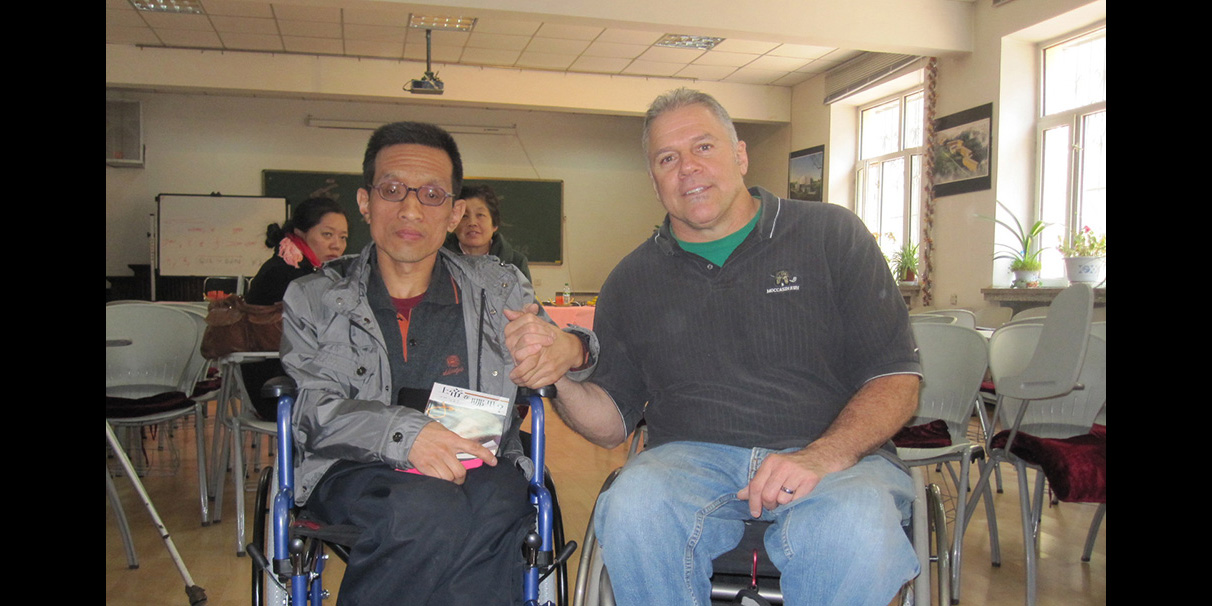
Mike King’s (1982 graduate) experience at Hesston College was a little different than most students’. He lived in Kauffman Court, went to classes in the basement of Mary Miller Library, ate his meals in the Hess Hall dining hall and visited friends in Green Gables. But for Mike, getting to his classes, the dining hall and to his friends’ dorm rooms required planning and the help of friends.
In 1978, a motorcycle accident left Mike in a wheelchair. During the summer of 1979, he was traveling through Hesston with a high school music group and stopped by campus for a visit.
“After my visit, I thought Hesston seemed like a great place to be,” said Mike. “I was the first Hesston student to be in a wheelchair. I talked with the administration about accessibility issues and they were very open to making changes to be accommodating for me.”
The college made Kauffman Court mod 1A2, a ground floor mod, wheelchair accessible and during Mike’s second semester, installed a stair glide to the dining hall in the basement of Hess Hall.
“Hesston’s campus was fairly easy for me to get around,” recalled Mike. “It helped that it was on the flat plains of Kansas, but if I wanted to go visit friends who didn’t live on the ground floor, go to a basketball game in Hess Hall or any other place with stairs, I would have to arrange for someone to meet me to help with the stairs.”
Looking back on his time at Hesston, Mike felt welcomed and was pleased with the campus community’s accommodations and willingness to learn what was necessary for disabled persons’ accessibility. Yet he admits that not having to plan ahead to get to certain spots on campus would have been welcome.
As the college has made updates and improvements to buildings over the last 30 years, full accessibility measures were implemented. The dining hall moved from the basement of Hess Hall to the new Bontrager Student Center in 1987, while the gym facilities moved from Hess Hall to Yost Center in 1982, both ground level structures.
Kropf Center replaced the razed Hess Hall in 1990 with all student-accessible areas located on the ground floor. An elevator was installed in the three-story Alliman Administration Building during renovations in 1998. Smith Center, home to Mary Miller Library since 2003, has classrooms in the basement that are accessible by an elevator. The college’s newest building, Friesen Center for the Visual Arts, is also a ground level structure.
Erb Hall, the three-floor residence hall which also has a recreational room and laundry facilities in the basement, remains inaccessible to those for whom stairs are an impossibility. The college plans to add an elevator to the dorms as the final step to recent renovations in Erb Hall central and west.
Mike supports the decision to make Erb accessible. As Community Relations Coordinator for Joni and Friends out of Mountville, Pa., Mike works with individuals, families and churches affected by disabilities, helping people to become more sensitive to those with disabilities.
“If Hesston College is open to all students – whether they live with a disability or not – putting in an elevator is a way to be welcoming,” said Mike. “I got by with what I needed, but a lot has changed since the early 80’s and people are more aware of what can be done to assist those with disabilities. I appreciate that Hesston is and was up front in saying campus isn’t completely accessible, but we want to take the steps to make it so. To be a truly welcoming campus, it is important to be accessible before someone asks you to.”

Hesston College offering China trip
General
International relationships are a vital part of the Hesston College culture both on and off campus. During the 2012 May term, beginning May 7, the college will expand its international learning opportunities with a three week trip to China led by sociology faculty and artist-in-residence Tony Brown and Chunrong Li, a Chinese citizen living in Philadelphia.
“Global awareness is a big part of what we do at Hesston College,” said Brown. “The trip is meant to be an inter-cultural experience for people to experience and explore Chinese history and culture.”
The trip is open to Hesston College students first, but the college is extending the invitation to anyone interested, including alumni and friends of the college, community members and others. Three hours of social science credit may be earned as part of the trip as well.
Most of the time will be spent in Beijing, the country’s capital city, with a three day trip to Xian, the first capital city of China and home to the famous terracotta warriors, made to protect the first emperor of China in his afterlife in the third century B.C.
Robert Peters, husband of Chunrong Li and a trained historian, helped Brown organize the details of the trip to make it authentic and allow participants to experience China in ways inaccessible to most tourists.
“This trip is a once in a lifetime opportunity,” said Peters. “Most visitors to China see the artificial, elite, tourist side of things, but this trip is designed to give a truly indepth encounter with the real China and see what life is like for the typical Chinese person.”
The itinerary includes ancient attractions like Tiananmen Square, the Great Wall, Ming Tombs and a variety of temples, museums and markets. With the connections and contacts Li has in her home country, the group will be able to experience the sites in a way most people cannot.
“Participants will do more than just walk along the Great Wall, they will get to learn what is underneath it, how it was built and how it is being restored,” said Peters. “They will learn that the best food is from a guy with a cart in a night market, not in the fancy restaurants.”
Availability for the trip is limited to 20 people, and the cost per person is based partially on the size of the group and the option of taking the trip for course credit, but is estimated to be between $3,200 and $3,800. All expenses, including airfare and other transportation, lodging, meals and admission to attractions are included in the cost. Deposits for the trip are due by March 1.
“If someone were to take this same trip through a travel agency, it would cost about twice as much and would not offer the same quality or authenticity of the trip we put together for Hesston College,” said Peters.
“The point of this trip is to allow students and others to become educated in a deeper, more spiritual way with China,” said Brown. “China has a kind of mystique that we will be able to experience as we learn its history and culture and dialogue with religious communities, artists and normal people just living their lives.”
For more information or to reserve a spot, contact Tony Brown at 620-327-8285 or tonyhb@hesston.edu.