
Administrative appointments announced
General
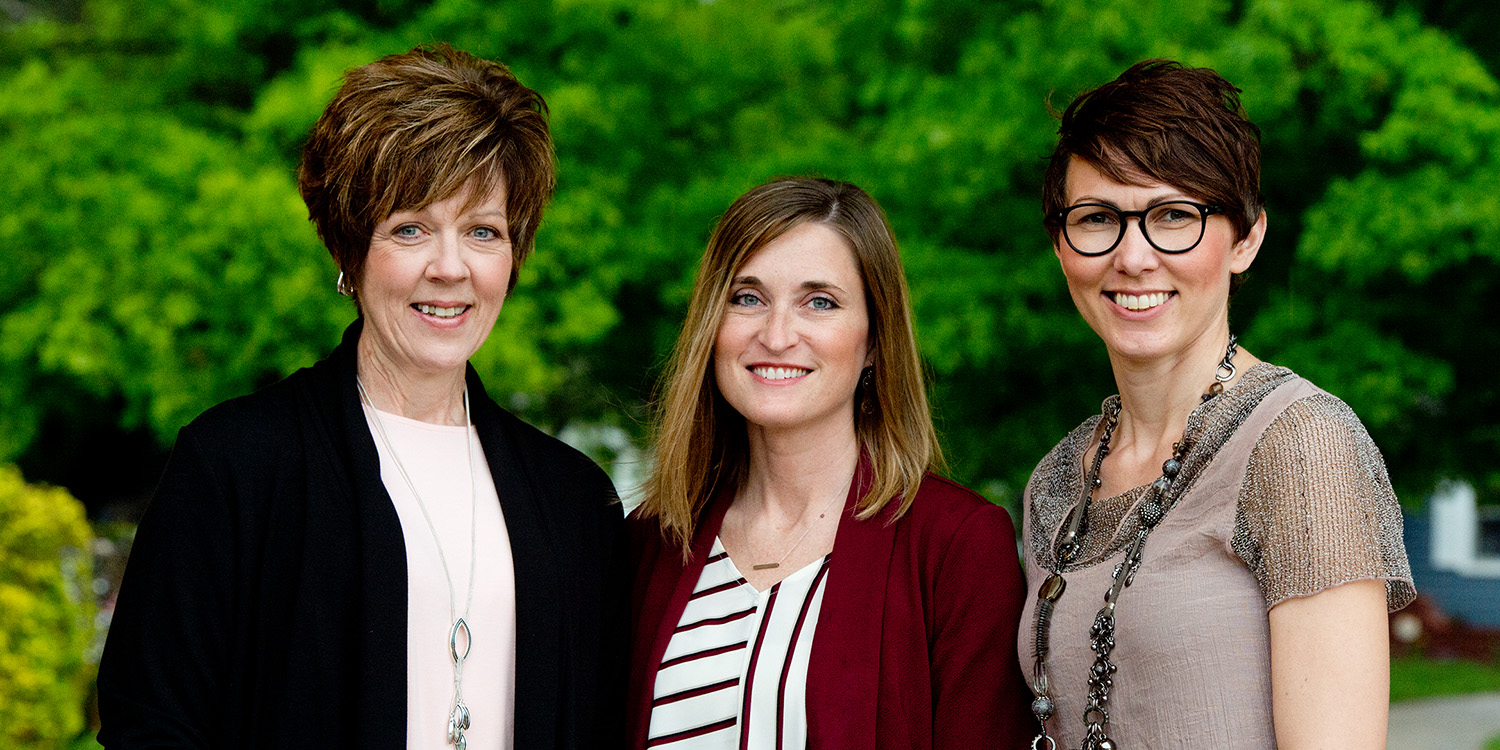
President Joseph A. Manickam has announced the appointments of three vice presidents in Hesston College’s administrative structure.
Stepping into the role of Chief Financial Officer and Vice President of Finance is Lisa George. George was most recently a business teacher at Newton (Kan.) High School. She is a Hesston College graduate, and holds a master’s degree in business education.
“Lisa brings real-world business leadership experience and an academic background to this role,” said Manickam. “I have been struck by the energy she brings to the position and the possibilities it holds in supporting and shaping Hesston College’s future.”
George replaces Mark Landes who served in the role for six years. Landes and his wife, DeeDee, will be serving in a year-long assignment with Mennonite Mission Network in Colombia.
Deb Roth has accepted the Vice President of Student Life role. No stranger to Hesston College, Roth has served in a variety of student success roles for 17 years, including education professor and, most recently, Dean of Student Success.
“Deb has championed student success in some form or another on our campus for many years, and I am excited by the strengths and gifts she brings to this role,” said Manickam. “She has extensive worship planning experience at both a congregational and denominational level. Such leadership will be important as we continue to develop the spiritual formation aspect of the student experience. Also, as we shift to increasing the junior and senior class population on our campus, I believe Deb will bring much wisdom to shaping the academic, social and spiritual aspects for those two years.”
Roth is a Hesston College graduate and holds a master’s degree in adult and continuing education. She replaces Juli Winter, who served as Interim Vice President of Student Life for a year, and at Hesston College for four years as dean of students.
Rachel Swartzendruber Miller has accepted the role of Vice President of Advancement. Swartzendruber Miller has served as Vice President of Enrollment at Hesston College since 2011 and has also been serving in an interim role of Vice President of Advancement since the middle of March following the departure of Byron Rupp.
“In the two months we have been discerning the future of leadership for the Advancement and Enrollment positions, it has become clear that Rachel has the energy and vision to lead the Advancement team,” said Manickam. “In her eight years in Enrollment, she has proven to be a creative leader with an excitement for new ideas and energy and energizing her team. I look forward to what she will bring to Advancement and working with a different constituency with similar goals.”
She is a Hesston College graduate and holds a Ph.D. in leadership with an emphasis in higher education administration.
A search will be launched for a new Vice President of Enrollment, which Swartzendruber Miller will continue to fill in the interim.

Hesston College Aviation and MEDA to partner for learning event
Aviation
A joint event with Mennonite Economic Development Associates (MEDA) and Hesston College Aviation, on June 4 will provide an opportunity for those with interest in international economic development or the aviation industry to learn more about opportunities within south central Kansas.
Hesston College Aviation will host the MEDA Kansas Network Hub for its quarterly gathering and catered meal at 5:30 p.m. at the Hesston College hangar at the Newton City/County Airport, 502 N. Oliver, Newton, Kan. The evening programming and meal are free though donations are welcome to help with expenses. Reservations are required by Friday, May 31 at meda.org/kansas-event or by contacting sballard@harperindustries.com or 620-896-7381. Space is limited, and reservations will be accepted until maximum capacity is reached.
The evening’s programming will include tours of the Hesston College Aviation facility and airplane fleet, meeting the instructors, and demonstrations on the Redbird MCX Advanced Training Device. Program director Mike Baker and other college representatives will also share about Hesston College’s 48-year history in training pilots and the recent addition of a four-year bachelor’s degree track in aviation-professional pilot, which will be offered as an option along with the two-year associate degree track beginning in fall 2019.
Along with pilot training, Hesston College also offers a plan of study in aviation-air traffic control, and is the only program in the state of Kansas and one of 36 nationwide to be approved as a Collegiate Training Initiative program by the Federal Aviation Administration (FAA).
Baker has served as director of Hesston College Aviation since July 2018. A graduate of Hesston’s aviation program, Baker worked with the U.S. Department of Transportation/FAA – Wichita Flight Standards District Office (US DOT/FAA – FSDO) as a front line manager in the General Aviation Operations Unity and Flight Safety International Certificate Management Unit from 2014 to 2018. He had previously served US DOT/FAA – FSDO as principal operations inspector and aviation safety inspector, as well as ground/simulator/aircraft instructor with FlightSafety International (Wichita), and manager, flight trainer/chief instructor/instructor pilot with International Flight Training Academy (Bakersfield, Calif.). He holds a master of business administration degree from Tabor College – Wichita, and a bachelor of science – professional pilot from Utah Valley State College (Orem).
For MEDA, partnering with a variety of educational and industry organizations, allows for wider awareness and support of its work being done around the world. Founded in 1953, MEDA is an international economic development organization whose mission is to create business solutions to poverty in developing regions. Last year, MEDA helped 91 million families in 60 countries around the world. Learn more at meda.org.
Larkfest awards recognize students for academic and leadership achievements
General
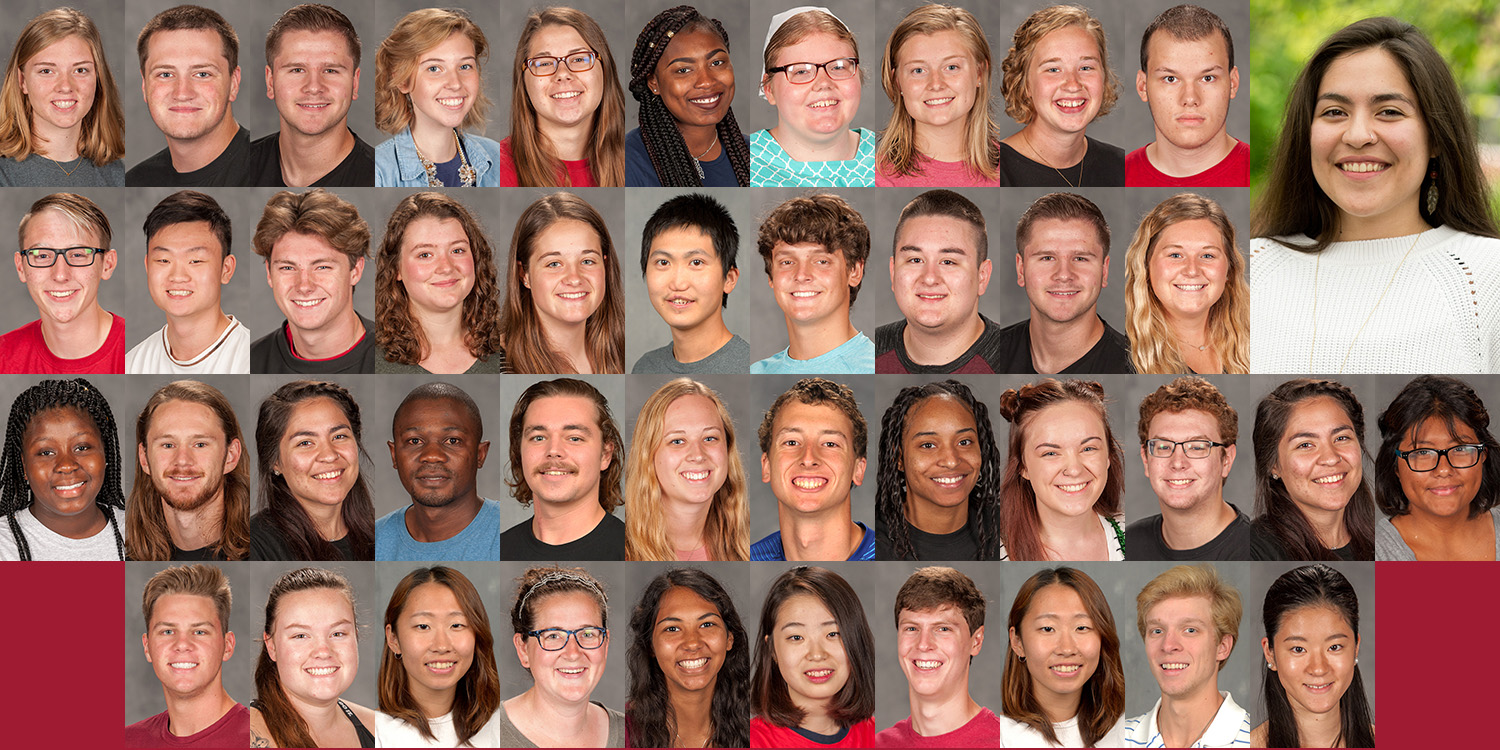
Hesston College students were recognized for their achievements in academics and leadership at the 2019 Larkfest Awards ceremony, May 3.
The top award for Lark of the Year award, went to sophomore Mariana Martinez (Tegucigalpa, Honduras) for excellence in leadership, academics and service. Students are nominated for Lark of the Year by faculty and the recipient is chosen by a faculty vote.
Other award winners include:
- Admissions Outstanding Ambassador Award: Abby Busby (Bandera, Texas), Joel Plank (Syracuse, Ind.), Tobie Plett (East St. Paul, Maintoba, Canada), Rae Reeves (Abilene, Kan.), Madison Swartzendruber (Goshen, Ind.) and Jasmine Taylor (Nassau, Bahamas).
- Amateur Radio Clean Sweep Award: Grace Allen (Abilene, Kan.), Jessica Buckwalter (Yona, Guam), Gracie Hochstetler (Leesburg, Ind.), Wyatt Krom (Ulysses, Kan.), Gavin Strohm (Haysville, Kan.), Tom Tien Lo (Hualien, Taiwan), Payne Wiseman (Haysville, Kan.) and Ellie Yoder (Seattle, Wash.).
- Behavioral Science Award: Jenna Denlinger (Lancaster, Pa.).
- Bill Mason Business Scholarship recipients to receive a $2,500 scholarship for their sophomore year of business study at Hesston: Matthew Byler (Shipshewana, Ind.), Dimitri Giannakopoulos (Houston, Texas), Michael Mullet (Lagrange, Ind.) and Tobie Plett (East St. Paul, Manitoba, Canada).
- Student Development Officer Awards for students who call alumni during Phonathon: Ashley Yasin (Lake Isabella, Calif.) for the most money brought in, and Laurine Yeboah-Appiah (Kumasi, Ghana) for the most completed calls.
- Clayton V. Beyler Award for Bible and Ministry students: Jaden Hostetter (Harrisonburg, Va.), Mariana Martinez (Tegucigalpa, Honduras) and Masemo Wakibogo (Hesston, Kan.).
- Daniel Gerber Peace and Service Award: Peter Harris (Lititz, Pa.).
- Outstanding Visual Arts Award: Lindsay Manwell (Wichita, Kan.) and Jared Oyer (Hubbard, Ore.).
- Dedicated Artist Award: Denazia Jeffers (Midwest City, Okla.).
- Mariann Martin Theatre Award: Leah Huyard (Staunton, Va.).
- Standing “O” Theatre Award: Colton Adams (Wichita, Kan.).
- Musician of the Year Award: Mariana Martinez (Tegucigalpa, Honduras).
- Education Award: Ivonne Ledesma (Wichita, Kan.).
- Peer Educator Award: Will Gaby (Goshen, Ind.) and Jenna Schneider (Lodi, Calif.).
- Physical Education Award: Rio Mori (Osaka, Japan).
- Nursing Excellence Award: Saralyn Oyer (Hesston, Kan.).
- Science and Math Awards: Faith Manickam (Hesston, Kan.) and Harune Suzuki (Osaka, Japan).
- Yoder/Zaid Scholarship: awarded to a chemistry student who shows promise, Stephen Waltner (Freeman, S.D.).
- Outstanding Academic Achievement Award: given to graduating international students with a 4.0 GPA, Rio Mori (Osaka, Japan).
- Resident Assistants of the Year: David Berzins (Houston, Texas) and Risa Fukaya (Zushi, Japan).
Bible and Ministry
General
For Risa Fukaya, the Hesston Experience has been transformative and unexpected, to say the least.
As she approaches graduation and the end of her time at Hesston, the sophomore from Zushi, Japan, will leave with expanded language skills, increased cultural understanding, influential friendships, an unexpected plan for her journey to come, and a new-found faith.
To start with, Hesston College even started as an unexpected possibility. Fukaya was thinking about schools in New York and California, until the agent with whom she was working to navigate the process of applying to U.S. colleges, suggested Hesston.
“My agent said, ‘There’s this college in Kansas that has a lot of international students…’ They suggested Hesston because it was going to be my first time living in the states, and it would be a good experience to get used to the language and culture and everything,” said Fukaya. “I didn’t really have a specific idea of where to go, so I thought, ‘Why not?’”
Like many international students, Fukaya never visited campus before she arrived as a student in August 2017, yet she was optimistic about what was to come. With nine years of private voice lessons under her belt, she had auditioned for and earned a spot with Hesston’s premier choir, Bel Canto Singers, where she began to form friendships.
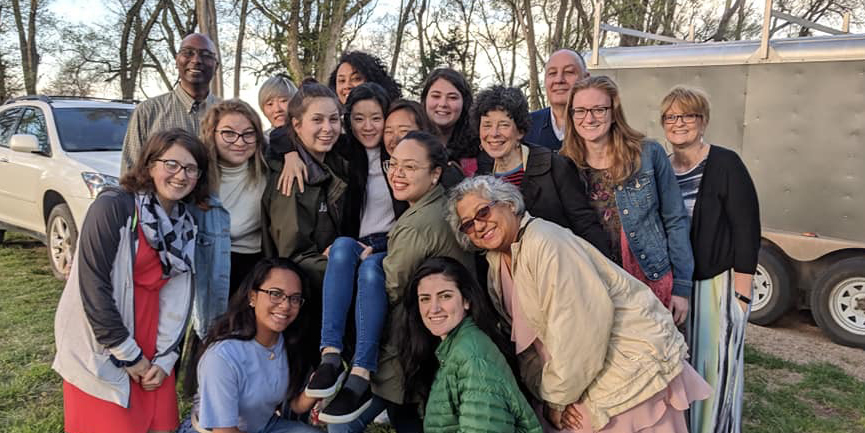
To top it off, she was paired with an American roommate, Madi Kauffman and the two bonded quickly. Fukaya began attending church at Kauffman’s home congregation at Journey Mennonite Church, Yoder (Kan.) campus, and would stay with Kauffman and her parents, Dale and Vicki, during breaks in the academic year, even living with them through the summer.
It was the relationships Fukaya formed with the Kauffmans and others that would prove to be life changing, and lead her to dedicate her life to Christ and be baptized on April 21, Easter Sunday 2019.
Fukaya didn’t grow up practicing a religion, but her arrival at Hesston and introduction to the Christ-centered faith community piqued her curiosity.
“I didn’t really know what Christianity meant, but when I would talk to my Christian friends about things going on in my life, their perspective and advice was so caring, and different than what I was used to; I was really interested in that spiritual perspective,” she said.
It was towards the end of her first year at Hesston, after having been exposed for about eight months to a new way of looking at life and situations, and having both classroom discussions and informal conversations that offered new ideas and concepts, that Fukaya recognized the existence of God and God’s care for her.
Fukaya had been going through a difficult situation with a friend, and during congregational sharing time at church, Kauffman encouraged her friend to share about her situation and ask for prayer for guidance. Following the service, another friend from church asked if she could pray with Fukaya.
“As she prayed, I turned my situation over to God for the first time,” Fukaya said. “I told God I just needed to know if I was doing the right thing. I can’t really explain how it felt, but I so clearly heard God tell me that I just needed to keep doing what I was doing. It was such a vivid moment of God speaking to me. I was shocked and speechless. That’s when I knew God was real and there for me.”
Since that moment about a year ago, Fukaya’s faith in God has grown as she has relied on God more as she navigates life and college in a new country and culture, dealing with friends, and serving as a leader among her peers as a Resident Assistant in the dorms.
Those closest to her also noticed the growth, and Dale Kauffman, her friend Madi’s father who is also on the pastoral team at Journey at Yoder and who has also become like a father to Fukaya as well, asked if she’d be interested in making a public statement of her faith through baptism.
So in a celebration of the new life found in Christ, the Easter morning sunrise service had an extra element added to it. The church family and many of Fukaya’s Hesston College friends and faculty and staff mentors were in attendance to celebrate with her.
“I had been thinking about my faith for a year and what it meant in my life,” said Fukaya. “When Dale asked if I wanted to be baptized, I knew it was something I wanted to do – to say this is how I want to live my life. I want to follow Jesus.”
Holding true to Hesston College’s tagline and commitment for students to “Start here, go everywhere,” Fukaya’s decision to attend Hesston has been the start for a new kind of journey.
Following her graduation from Hesston, Fukaya has decided to take a gap year before continuing her education, and has committed to spending a year in a service assignment through Mennonite Mission Network. She doesn’t know much yet about what her service role will entail, but hopes to be a blessing to the people she encounters in the same way the people in her life have been a blessing.
“These two years have been such a time of growth,” said Fukaya. “God used my friends to deliver a message into my life. I want to continue growing that same kind of love inside of me and being ready to give it to people at any time and in any place.”
Speakers for Commencement 2019 announced
General
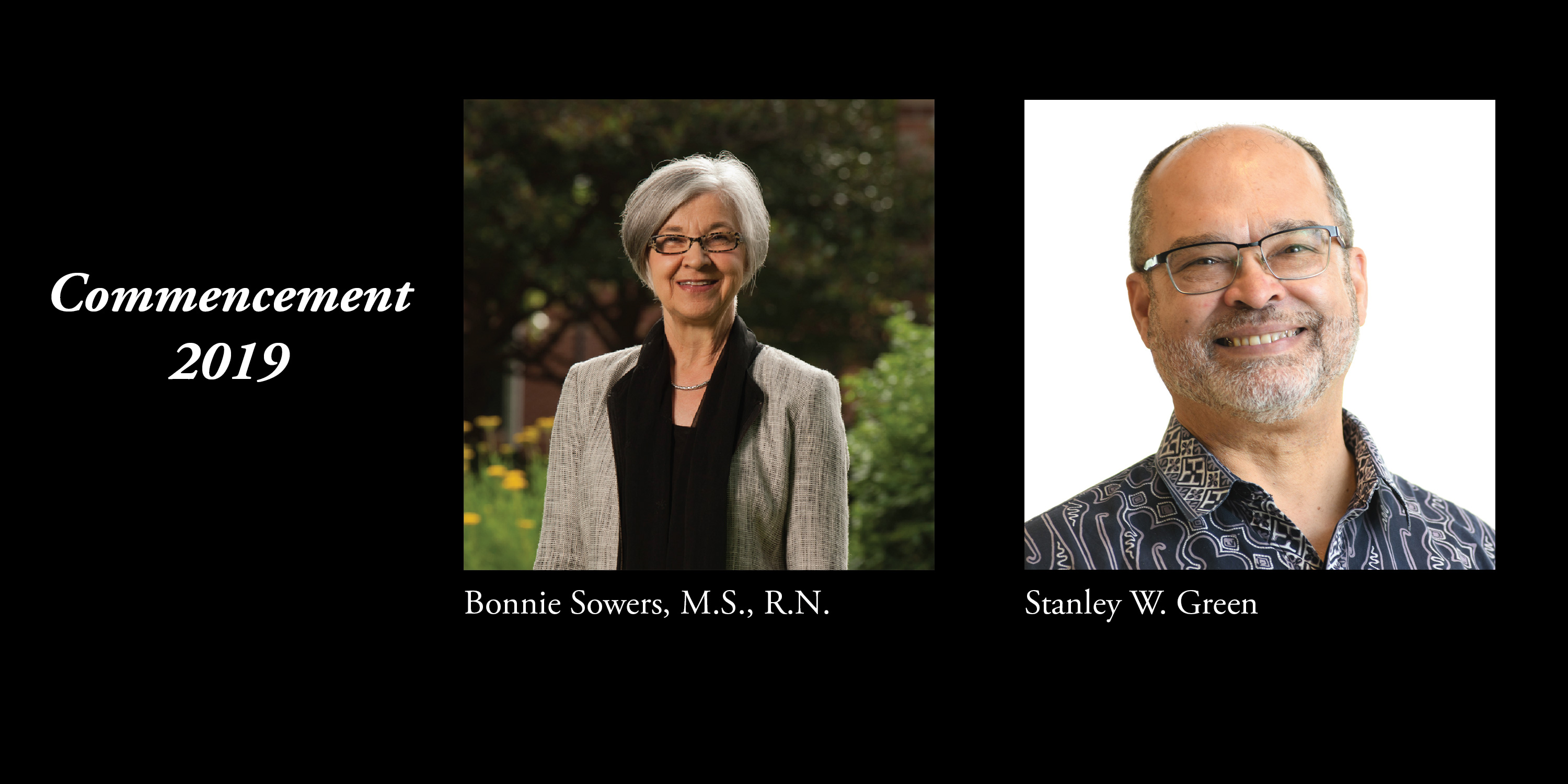
Hesston College announces Bonnie Sowers and Stanley W. Green, two long-standing professionals in their fields, as the commencement speakers at separate Bachelor of Science in Nursing and Associate Degree ceremonies on Saturday, May 18.
Due to construction in Hesston’s Yost Center gym, the typical site of Hesston College graduation ceremonies, the 2019 event will instead be held at the on-campus church, Hesston Mennonite Church. With a smaller maximum capacity than the gym, the venue will see two separate graduation events on the day.
The Bachelor of Science in Nursing Commencement and Pinning Ceremony will be at 10 a.m. on May 18, with emeritus faculty member Bonnie Sowers, M.S., R.N., delivering the commencement address.
Sowers led the Hesston College Nursing program from 1980 until stepping down from the role in 2017. Prior to leading what has become the college’s largest academic program, Sowers was a professor in the nursing department, and continued to teach for one year after stepping back from the director role, serving at Hesston College overall for about 47 years. Under her leadership, Hesston College Nursing established itself as a highly successful and respected program, became the largest program on campus, and transitioned from a two-year degree program to the college’s first four-year degree program in 2015.
The Associate Degree Commencement Ceremony will be at 7 p.m. on May 18. Stanley W. Green, executive director for Mennonite Mission Network (MMN) will present the commencement address.
Green has served at the helm of MMN since its founding in 2001 by the leaders of the emerging Mennonite Church USA. Prior to that appointment, Green served for seven years as president of Mennonite Board of Missions, the mission agency of the former Mennonite Church. Born and raised in the apartheid system of South Africa, Green has worked for human rights, social justice movements and in ministry around the world.
Both ceremonies will be streamed live online at hesston.edu.
Students completing the Disaster Management Program will be celebrated in a special recognition ceremony at 1 p.m., Saturday, May 18, in Keim Center’s Bontrager Worship Center.
In addition to recognizing student accomplishments and graduates, the weekend will also include several performances and exhibitions. See a full Commencement Weekend schedule at hesston.edu/commencement.
Other weekend events include:
- Art exhibts featuring student work in the Regier Friesen Gallery and throughout Friesen Center. The exhibit will be open from 9 a.m. to 4 p.m. throughout the weekend.
- Sophomore music student recitals throughout the weekend.
- Bel Canto Singers “Grant Us Peace” concert at 7 p.m., Friday, May 17, at Hesston Mennonite Church.
- Go Everywhere graduate reception at 8 p.m., Friday, May 17, in the Hesston Mennonite Church Community Center.
- Theatre Showcase featuring a themed collection of scenes and monologues at 4 p.m., Saturday, May 18. Doors open at 3:45 p.m.
Third Andover Organ series to close with KU graduate students
General
Music
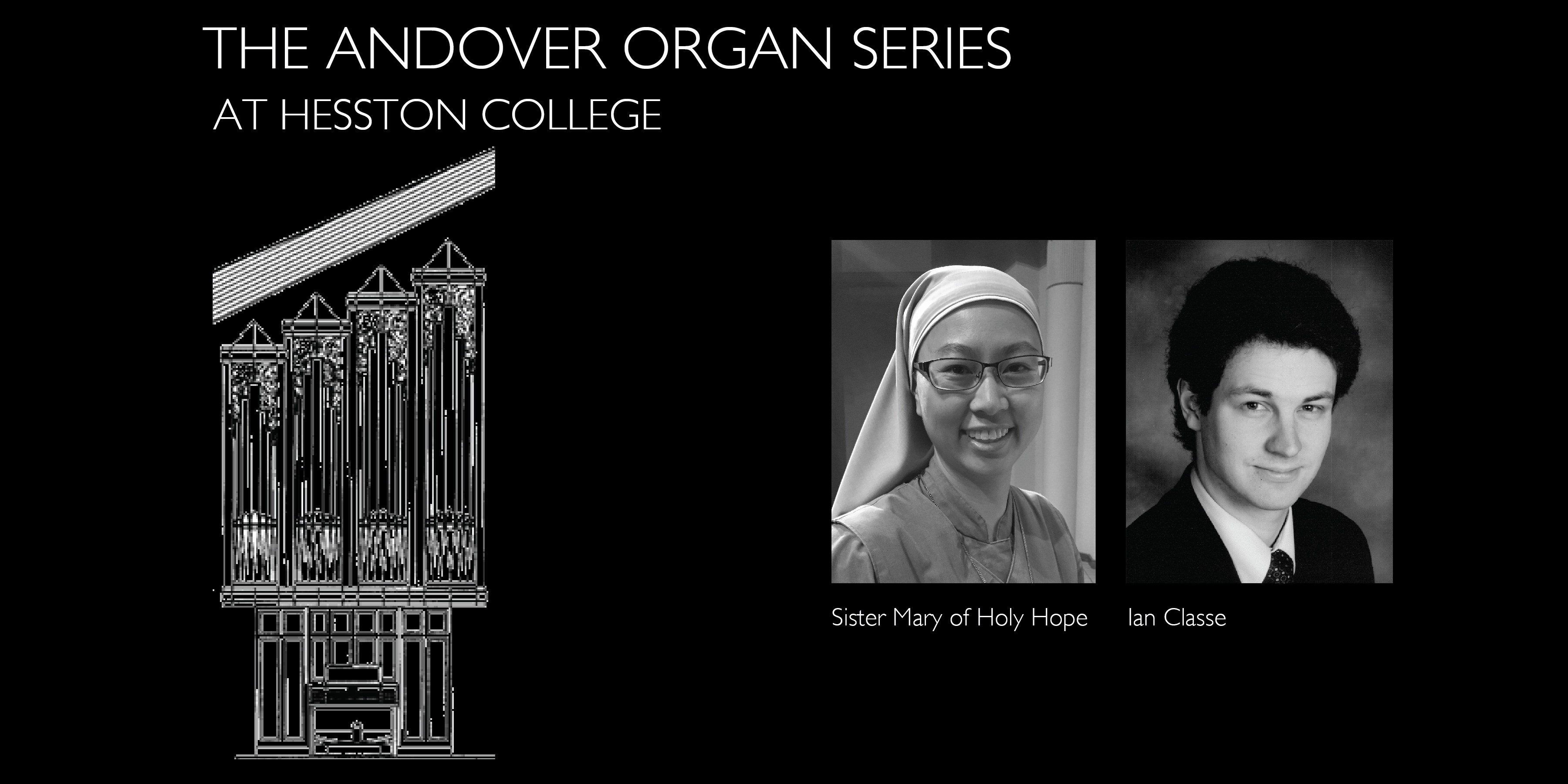
The final concert of the 2018-19 Andover Organ Series at Hesston College will feature two University of Kansas (Lawrence) (KU) graduate students, Sister Mary of Holy Hope and Ian Classe. The concert will be at 7 p.m., Friday, May 10 at Hesston Mennonite Church on the Hesston College campus. The concert is free and a reception will follow the performances.
Sister Mary of Holy Hope has the motto, “Praise Him with strings and pipes,” (Psalm 150). Sister has served at Our Lady’s Montessori School (OLMS) in Kansas City, Kan., as a preschool teaching assistant and music teacher since 2011. In 2017, she began pursuing a Master’s of Music in church music at KU, studying organ with Dr. Michael Bauer. She also serves at Our Lady of Good Counsel Church in Kansas City, Mo., as an organist and cantor, and continues to teach preschool music at OLMS.
A native of St. Louis, Mo., Ian Classe is a Doctor of Musical Arts candidate at KU. He received his undergraduate musical training at Truman State University (Kirksville, Mo.), then earned master’s in organ performance from Pittsburg (Kan.) State University where he studied organ, harpsichord and choral conducting with Dr. Susan Marchant. At KU, Classe has studied organ with Dr. James Higdon and choral conducting with Dr. Michael Bauer.
An active keyboard performer and church musician, Classe is in demand as a recitalist and is completing a doctoral project on American organ music of the late-19th century. He presently serves as principal organist at Corpus Christi Catholic Parish in Lawrence, where he recently participated in a recording project of music for the liturgical year.
The Andover Organ Series at Hesston College is funded by the John Ernest Foundation and features organists from around the world. Andover organs are built by the Andover Organ Company of Methuen, Mass. The company builds and restores mechanical action pipe organ, and since its founding in 1948, has restored more than 500 organs across the U.S., as well as building new instruments, including the Opus 116 pipe organ installed at Hesston Mennonite Church on the Hesston College campus in 2007.
Alumna to develop and lead new ministry program
Bible and Ministry
General
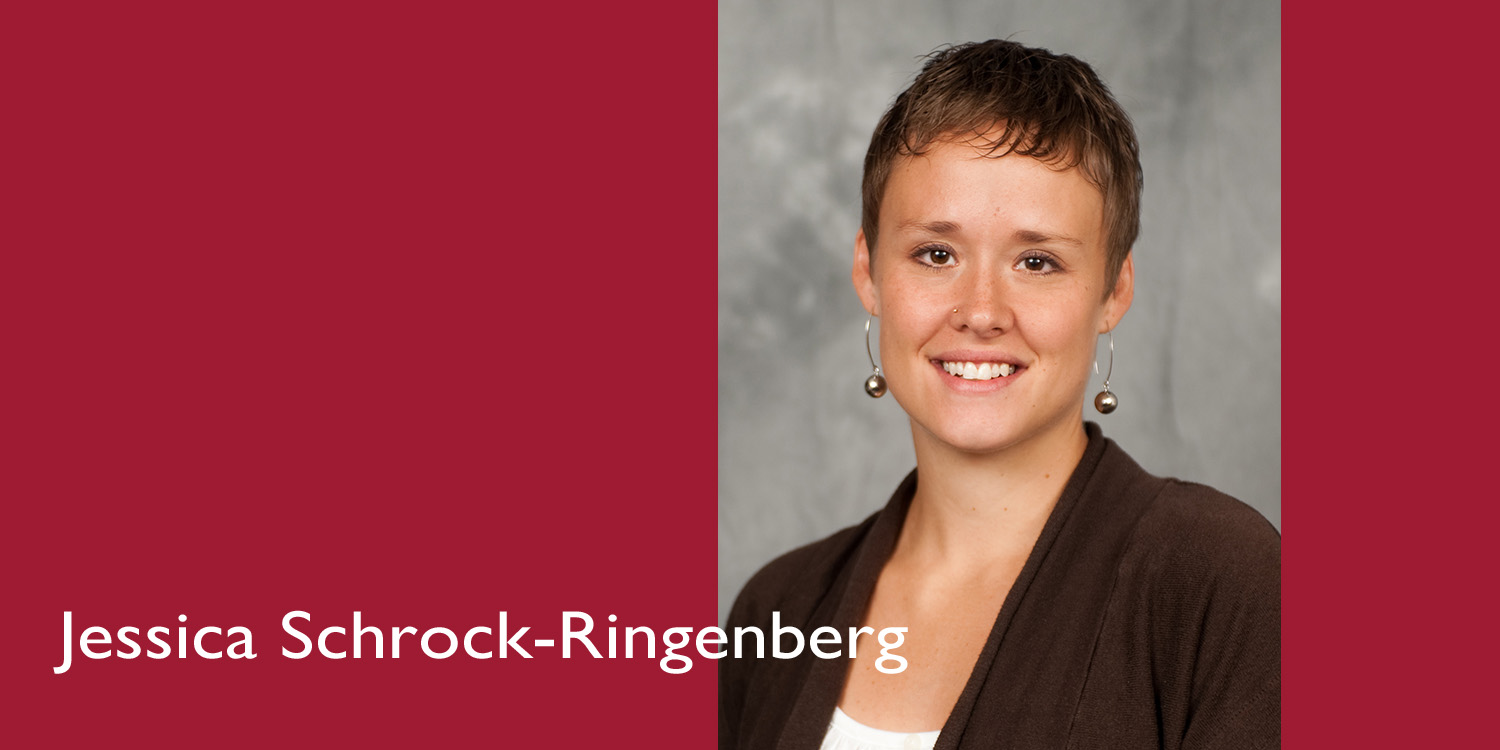
Hesston College announces the recent hire of Jessica Schrock-Ringenberg as the director for a new ministry program that will begin in development stages this spring.
The new ministry program will provide Anabaptist theology and nurture missional leadership for pastors and other church leaders in a distance-based format. It comes as a replacement to Hesston College’s Pastoral Ministries program, which closed in 2014 with a commitment to the development of a new program.
“It has been about five years since we closed the residential Pastoral Ministries program, but we have been seeking to re-start a ministry program that can equip disciples in a variety of locations and contexts,” said Brent Yoder, vice president of Academics. “Jessica has a vision for how Hesston College can serve others in the church and the world, and we are excited that she has accepted the call to develop and direct this new program.”
A graduate of Hesston College, Goshen (Ind.) College and Anabaptist Mennonite Biblical Seminary (Elkhart, Ind.), Schrock-Ringenberg served as a pastor of Zion Mennonite Church (Archbold, Ohio) for 11 years, as well as in a variety of roles for Mennonite Church USA, including convention planning and as a member of the Constituency Leadership Council (CLC). She and her husband, Shem, recently relocated to the Kansas City area where they bought a heating and cooling business and also hope to plant a church. In addition, Schrock-Ringenberg serves as a missional discipleship leader and consultant with the Five-fold Leadership Development Assessment and the Exponential Emerging Leaders Cohort.
Schrock-Ringenberg has served as a member of the Hesston College Board of Directors since 2011, and will complete her second four-year term in May before transitioning to serve as an employee in early June.
Schrock-Ringenberg will continue to reside in the Kansas City-area, with regular teleconferencing and trips to Hesston. As the program develops and curriculum is established and approved, her role will transition from developer to instructor.
“Jessica has experience teaching disciples how to make new disciples, and she knows how to help others catch that vision,” said Michele Hershberger, Hesston College Bible and Ministry department chair. “Under her leadership, Hesston College can become a center for a new kind of missional leader in the church.”
Bel Canto Singers to tour Oregon and Washington May 21 to 29
General
Music
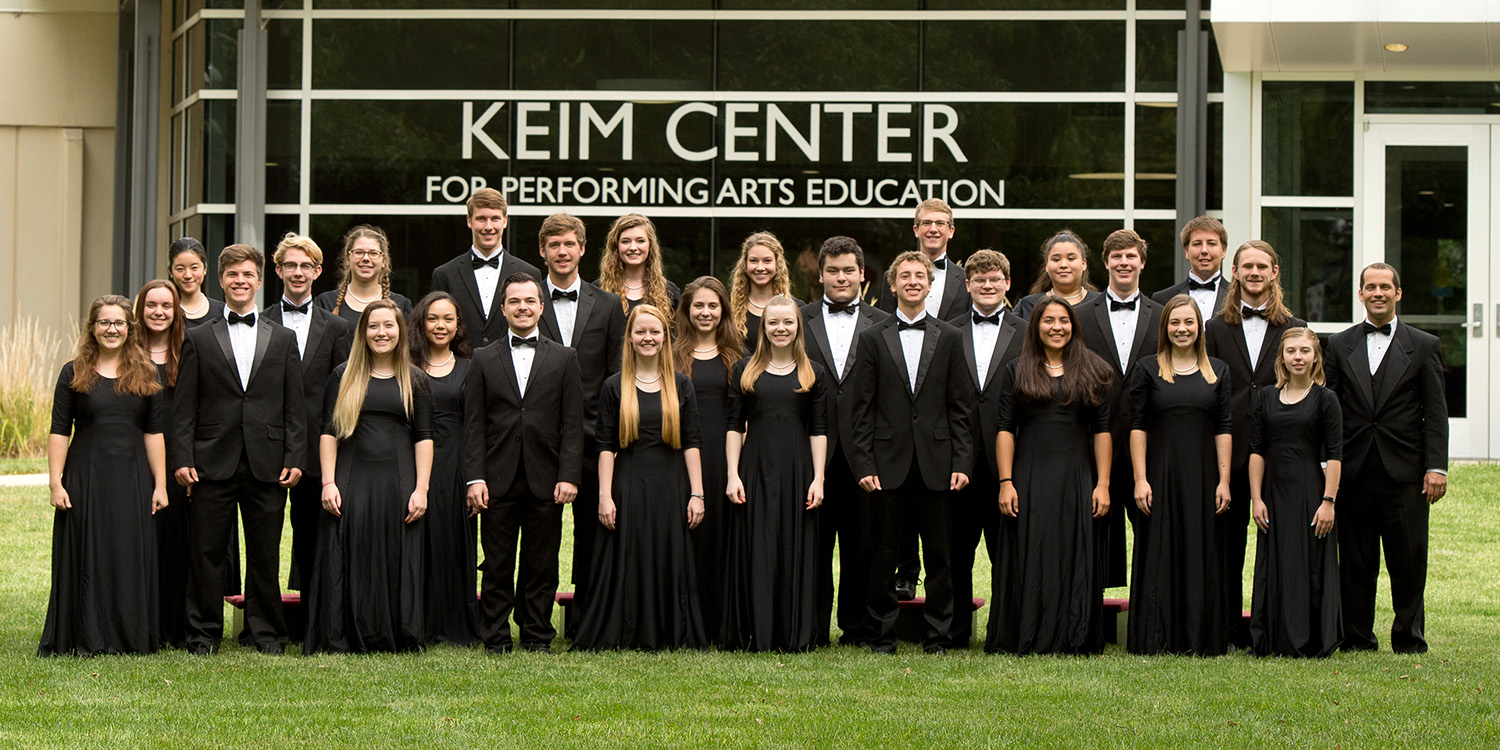
Hesston College’s premier vocal ensemble, Bel Canto Singers, is preparing for a tour to Washington and Oregon May 21 to 29, following the end of the academic year.
The 25-voice mixed chamber choir, under the direction of Dr. Russell Adrian, will present a program entitled “Grant Us Peace,” which was inspired by the college’s International Peace Day celebration in September, and features a culmination of works performed throughout the year focused on peace and justice. The concert features a cappella and accompanied works from Renaissance through contemporary composers with special music by soloists and small ensembles.
The tour itinerary includes:
- Sunday, May 19, 7 p.m. - Rainbow Mennonite Church, 1444 Southwest Blvd, Kansas City, Kan.
- Tuesday, May 21, 7 p.m. - Seattle (Wash.) Mennonite Church, 3120 NE 125th St
- Friday, May 24, 2:30 to 2:55 p.m. - Western Christian School, 9045 Wallace Rd NW
- Friday, May 24, 7 p.m. - Salem (Ore.) Mennonite Church, 1045 Candlewood Drive NE, Reception following concert
- Sunday, May 26, 10:45 a.m. - Zion Mennonite Church, 6124 S Whiskey Hill Rd, Hubbard, Ore.
- Sunday, May 26, 7 p.m. - Portland (Ore.) Mennonite Church, 1312 SE 35th Ave
- Tuesday, May 28, 7 p.m. - Bend (Ore.) Mennonite Church, Heritage Hall, 230 NE 9th Street
- Wednesday, May 29, 7 p.m. - Albany (Ore.) Mennonite Church, 3405 Kizer Avenue NE
Members of the Bel Canto Singers are: Erica Baer, Apple Creek, Ohio; Tanner DeGrado, Newton, Kan.; Harley Foster, Lancaster, Pa.; Risa Fukaya, Zushi, Japan; Elizabeth Fulcher, Goodland, Kan.; Esmi Hernandez, Newton, Kan.; Jaden Hostetter, Harrisonburg, Va.; Leah Huyard, Staunton, Va.; Chris Lichti, Shickley, Neb.; Nicole Loewen, Hutchinson, Kan.; Taylor Longenecker, Harrisonburg, Va.; Mariana Martinez, Harrisonburg, Va.; Rachel Miller, Freeman, S.D.; Jared Oyer, Hubbard, Ore.; Emma Prowell, Lenexa, Kan.; Raelynn Reeves, Abilene, Kan.; Seth Rudeen, Osage City, Kan.; Kenton Schroeder, Harper, Kan.; Jack Shingler, Creston, Ohio; Dylan Slabach Brubaker, Harrisonburg, Va.; Therin Smith, Key West, Fla.; Addie Swartzendruber, Henderson, Neb.; Madison Swartzendruber, Goshen, Ind.; Stephen Waltner, Freeman, S.D.; and Navy Widyani, Jakarta, Indonesia. Music professor Ken Rodgers is accompanist for the group. The 2018-19 year marks the 35th season for the Bel Canto Singers. The group carries out ambitious concert and touring schedules annually. Recent juried appearances have included performances for VOCES8, Chanticleer, The King’s Singers, Charles Bruffy and the Rose Ensemble.
Campus bike share program addresses transportation and physical activity needs
General
Nursing
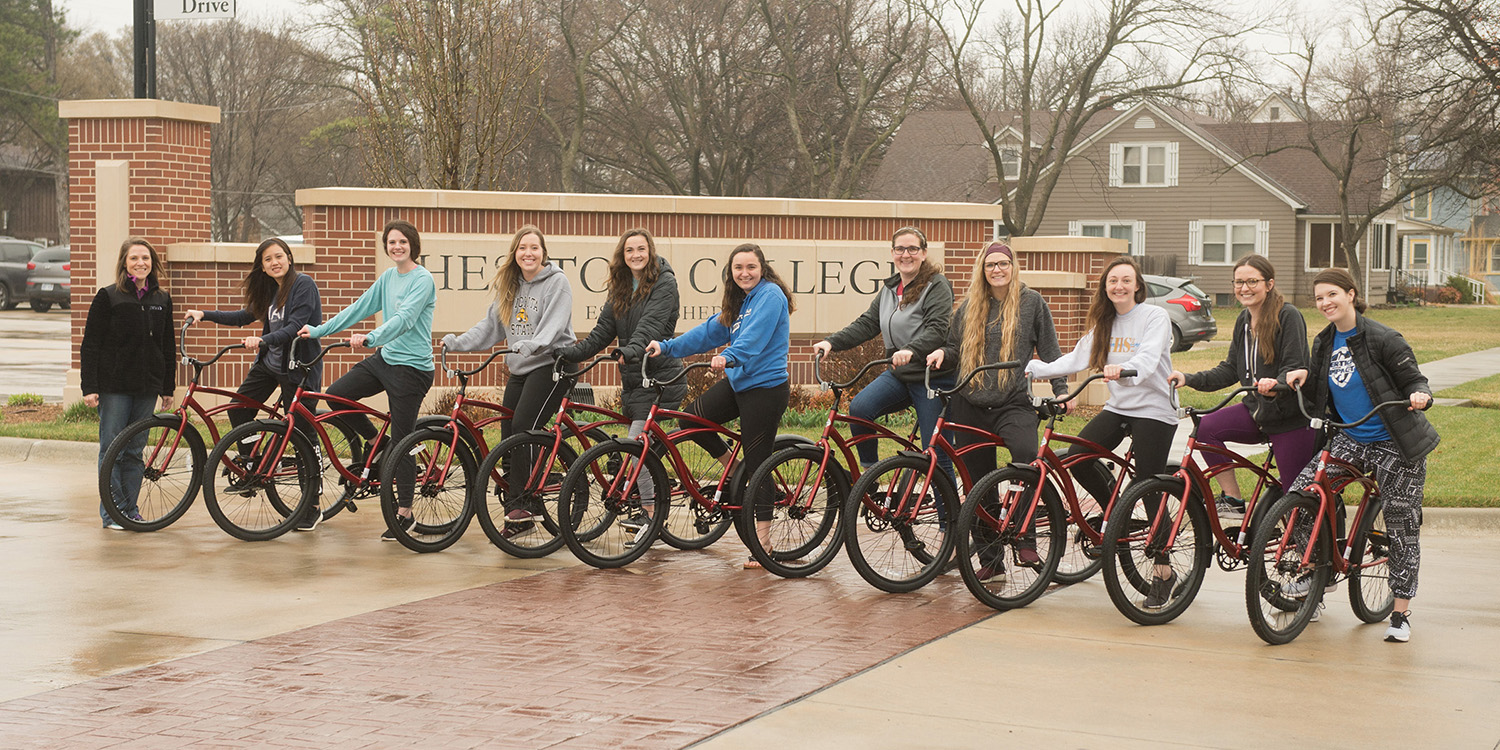
As the spring weather turns more mild, Hesston College students start spending more time outdoors in activities both on campus and off. A new bike share program, implemented by a team of student nurses in the college’s nursing program, was launched just in time for the change in weather and will allow members of the campus community to get around campus and the community more quickly.
Early in the spring semester, senior nursing students in a population-based nursing class were introduced to their clinical locations throughout the area and tasked with identifying health-based concerns in those contexts, and formulating and carrying out a plan to address those concerns.
“Many people are familiar with nurses at the bedside, but unfamiliar with the broader population health knowledge required and utilized by B.S.N.- (Bachelor of Science in Nursing) prepared registered nurses,” said nursing professor Duane Miller. “The Population-based Nursing course focuses on the health of populations or groups and emphasizes nursing practice at the community and systems levels.”
For the 10 students assigned to the clinical site of Hesston College, assessing health needs seemed like a complicated task.
“The needs may be less obvious, but they are there nonetheless,” said Miller.
The students started by conducting a windshield of both campus and wider community.
“A windshield survey is where we drove around the Hesston community and payed attention to really good things about our community and things that needed improvement,” said student Saralyn Oyer. “We did the same thing on campus by walking around and observing these things.”
One thing the students noted was the need for transportation.
“Many Hesston College students come from far away states and countries, and many have no means of transportation,” said Oyer. “I live on Weaver St. near the Casey’s gas station and I see students walking there all the time. This might not seem far, and the physical activity is good, however, we realized these same students, as well as many others, have to coordinate rides or walk to things like doctor appointments or school observations for education majors.”
The students also noticed a need for increased physical activity.
Taking into consideration the need for free transportation around the community as well as encourage enjoyable physical activity, the student team came up with the idea of a bike share program with 10 bicycles that can be checked out for use through a system at the college’s Mary Miller Library.
“This group of students was highly motivated throughout the process,” said clinical instructor Joy Yoder. “I provided guidance and helped the group to focus their energy, but the leadership in this group was solid. After the students talked with other students, faculty and staff about the project, they gained momentum from the excitement that this project would be positive for both mental and physical health for the campus. Knowing that students would have access to much needed transportation options, along with a way to increase activity, was a catalyst for this group.”
The students found a grant through WalMart, of which they were awarded $500. The funds helped cover the upfront cost of the bikes. They also consulted with psychology and Bible professor, Kevin Wilder, who had experience with operating a bike share. Wilder suggested they find individual sponsors to help cover the remainder of the costs, which they did among college faculty and staff.
Overall, the team was able to raise enough funds to cover the cost of the bikes, as well as accessories, such as locks and helmets, and start a fund to cover future maintenance. The college’s Environmental Stewardship Council agreed to help keep the bike share program running after the students graduate this May.
“I really love how the Population-based Nursing class integrates core values of Hesston College as we focus on caring relationships created in these community settings where we creatively explore ideas to improve health,” said Yoder. “The student is challenged in this course and can end with a broader perspective of nursing, realizing where nursing care can be integrated throughout the communities and not just in hospital settings.”