
Japanese youth visit on language study tour
General
Hesston College has been hosting international students on campus for more than 70 years, but this summer, they’re doing it in a new way.
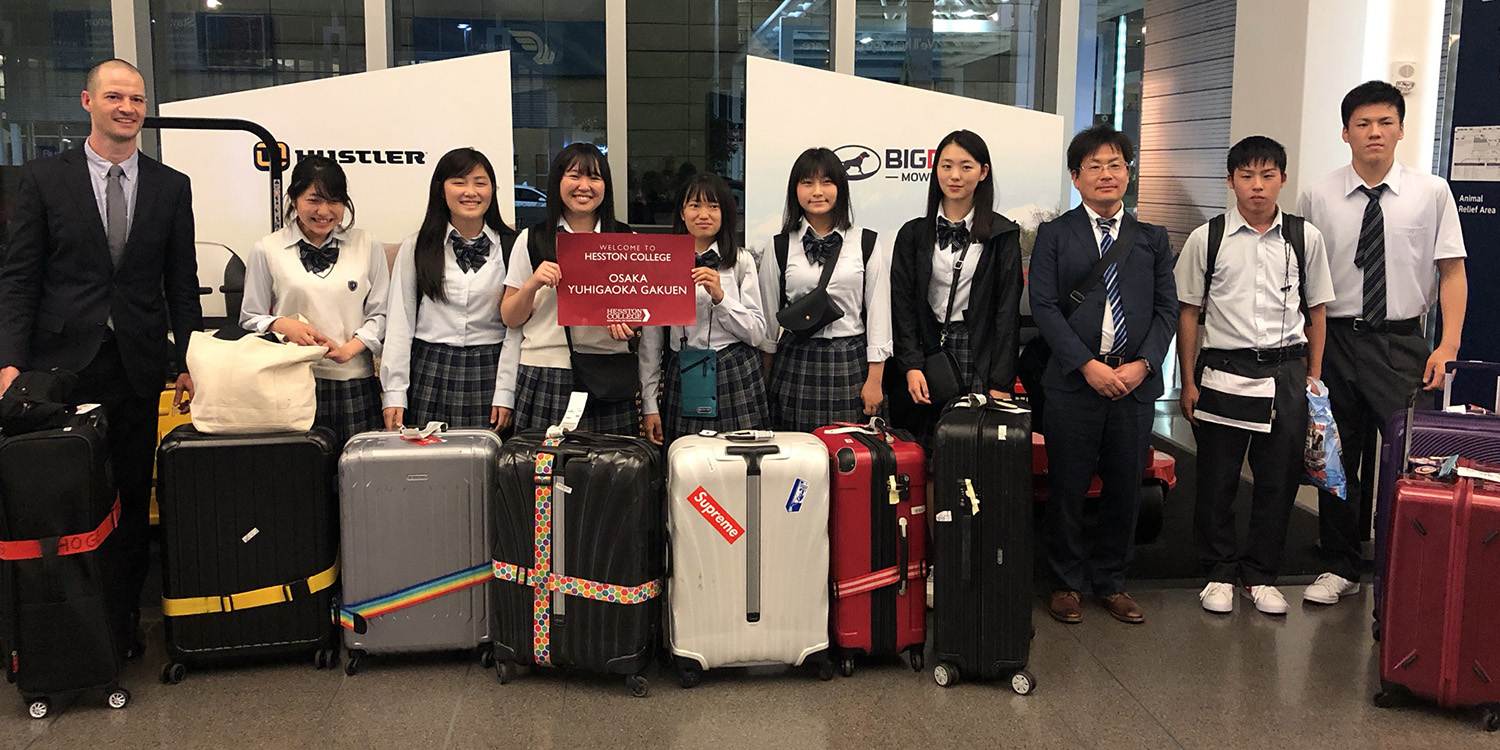
Eight Japanese high school students and two sponsors arrived to campus on July 30 for a week and a half-long English Language Study Tour.
“This is a short-term program that allows the students to develop their English language skills in an immersive setting, and also lets them explore Hesston College as an option for collegiate study in the United States,” said Chandra Johnson, director of Hesston College’s new Intensive English Language Program (IELP).
The students all come to Kansas with beginner level English, but the trip allows them to be immersed in the language and improve their conversation skills, as well as learn about American culture.
The trip is filled with English language classes, discovering what majors Hesston College offers and exploring South Central Kansas. Each day’s activities are planned around a theme – Thursday’s Aviation Day included visits to Executive AirShare at Jabara Aiport in Wichita, a trip to the Kansas Aviation Museum, and a visit to Hesston College’s Aviation program hub at the Newton City/County Airport. Other day’s lessons are health care, farm and nature, business, and art and theatre.
The group is from Osaka Yuhigaoka Gakuen high school (OYGHS). Coming from Osaka, a city of nearly 3 million people, to Hesston, Kansas, a community just over one percent of the population size as their home, is a big change to say the least. The students will stay in the Hesston College dorms for much of the visit, but during the weekend, each student will stay with a host family and further explore the area.
A trip like this has been in the works for a while. Dave Osborne, former Hesston College Director of International Admissions, began building a relationship with OYGHS in 1998 when he first visited the school. Over the next 19 years, he visited the school 16 times and the school sent 12 students to study at Hesston College.
With the launch of Hesston’s Intensive English Language Program at the start of the new school year in August, program faculty hope language study trips like this one will continue.
“It’s exciting to be able to offer this new kind of experience to international groups,” said Johnson. “We look forward to the relationships that will continue to grow through it.”
Vice President of Admissions appointment rounds out administrative council
General
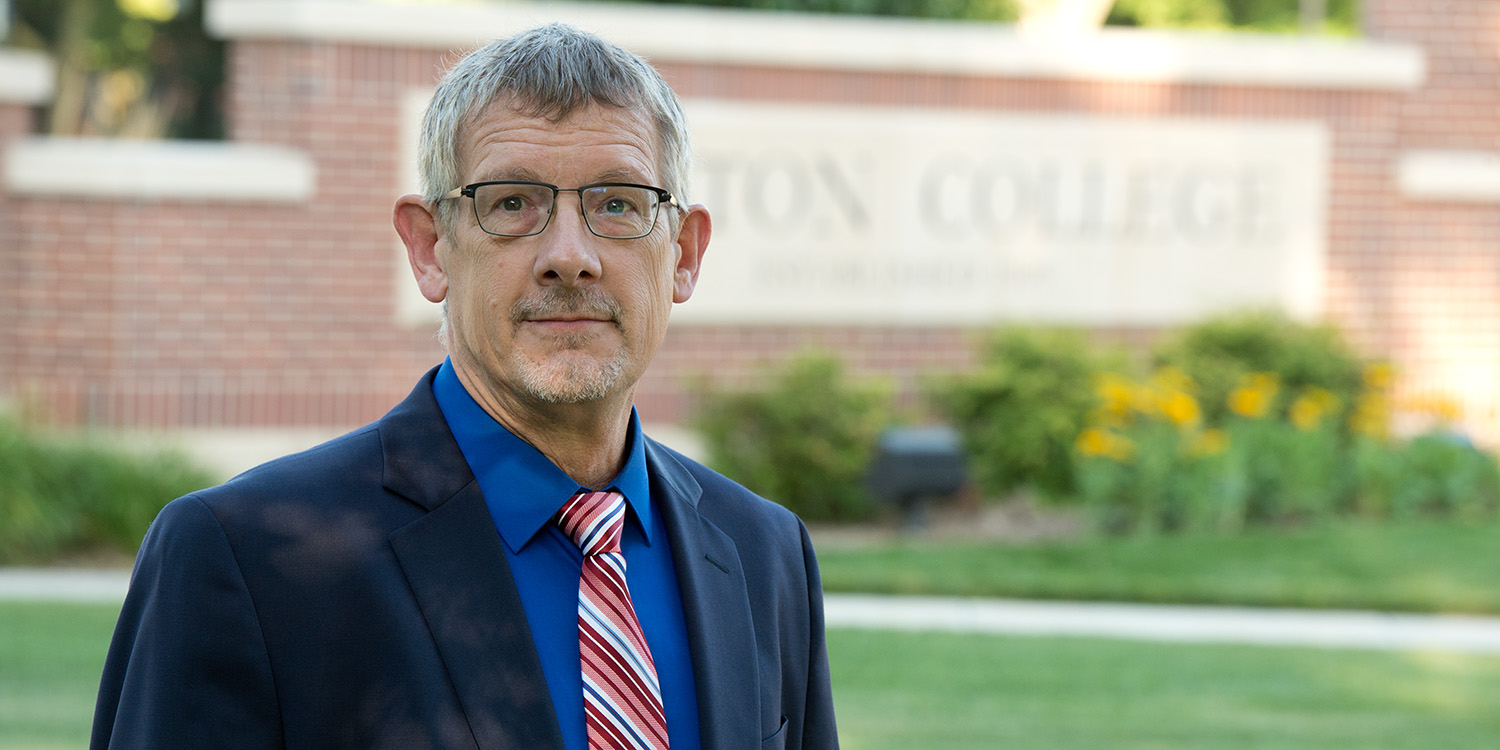
President Joseph A. Manickam has announced the appointment of Del Hershberger as the Vice President of Admissions in Hesston College’s administrative structure. Hershberger’s hire completes the six-person administrative council of Manickam and five vice presidents.
Hershberger will begin his role in mid-August.
“I am pleased to have Del join the leadership team at Hesston College,” said Manickam. “Along with experiences in recruitment and ministry, he has a vast network of global connections as well as transcultural experiences that will be valuable as we continue to work with students and organizations around the world and expand cross cultural opportunities for the campus community.”
Hershberger served for 22 years with Mennonite church mission agencies, first as program director at Mennonite Board of Missions (MBM), and most recently, as department director when the organization became Mennonite Mission Network (MMN – Newton, Kan.) in 2002. At MMN, Hershberger’s role included leading and supervising the Christian Service Team, including program directors, recruiters and administrative assistants. He also served on Director’s Cabinet to ensure inter-departmental collaboration and organizational effectiveness.
Prior to his work with MMN and MBM, Hershberger was pastor of Zion Mennonite Church, Hubbard, Ore., for seven years and a sales and contract manager for a school bus company for six years.
Hershberger studied theological studies in the master’s degree program at what was then Associated Mennonite Biblical Seminary, Elkhart, Ind., and earned a bachelor’s degree in communication from Goshen (Ind.) College.
“Love for Hesston College goes deep in my bones,” said Hershberger. “I look forward to the opportunity of working with admissions staff and the rest of campus to share about the college’s amazing programs and nurturing community so we can invite many more students to experience the transformation that can happen here.”
Virtual mobile theater experience to provide glimpse of the power of tornadoes
General
Even though tornadoes are a very real threat living in the plains and directly in tornado alley, many people have never experienced the full extent of what tornadoes are capable of.
Mennonite Disaster Service’s (MDS) Storm Encounter mobile virtual theatre will be at Hesston College on Sunday, July 28, from 3 to 7 p.m., allowing participants to experience the sights and sounds of a tornado, and also learn how the organization brings hope to survivors of tornadoes and other disasters. The experience is hosted by the Hesston College Disaster Management Program.
The Storm Encounter will be set up on the northeast area of the Hesston College campus near Keim Center. The experience takes about 30 minutes, and groups of eight can rotate into the exhibit every 15 minutes. To reserve a spot for a group, contact Cleo Koop at 316-282-0797. Walk ups are also welcome.
Hesston College’s Disaster Management Program is affiliated with Mennonite Disaster Service, offering skills, experiences and knowledge for disaster recovery, including physical, psychological, social and spiritual recovery.
Hesston College fills new academic role
General
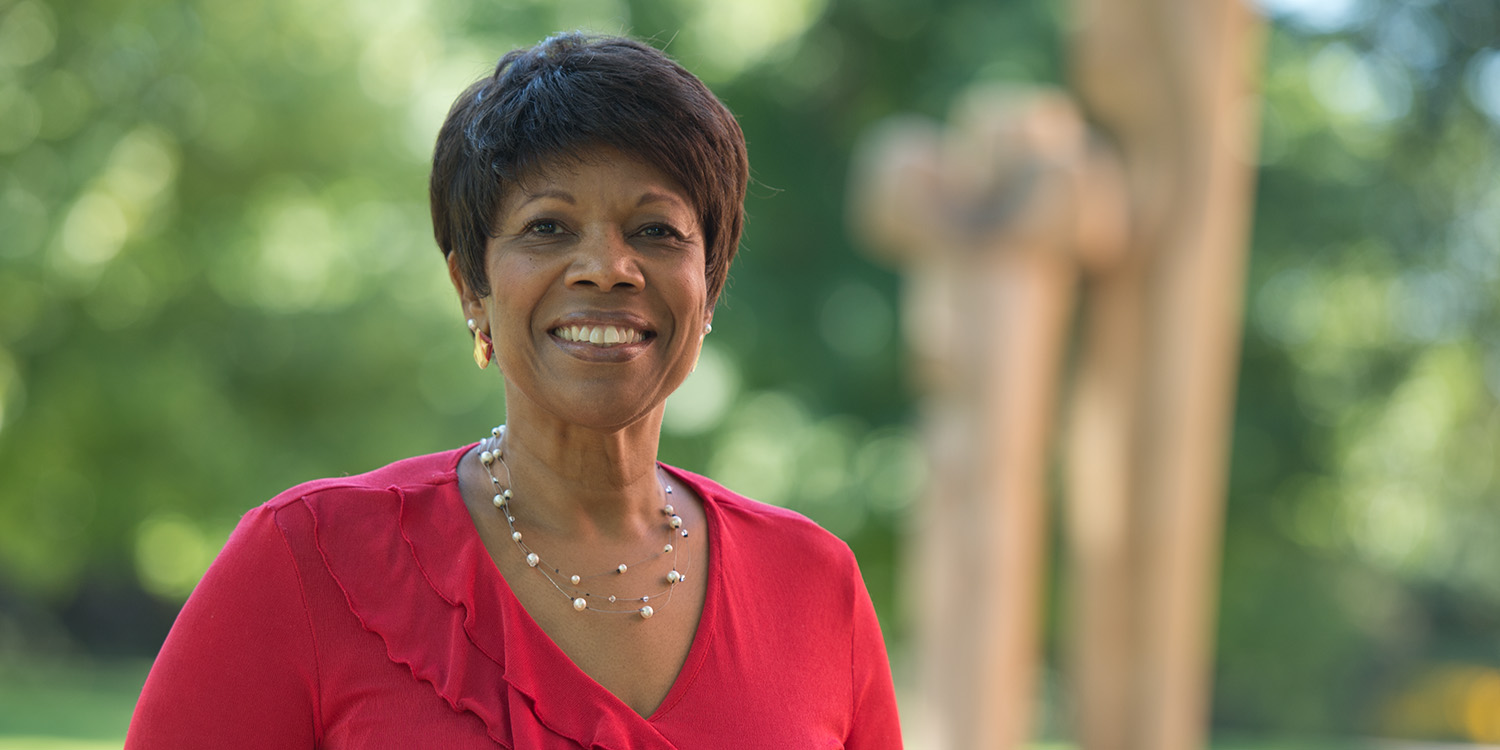
Hesston College has announced Dr. Carren Moham as the new Associate Academic Dean. Dr. Moham will start her new role at the beginning of August.
The role of Associate Academic Dean is a newly formed position at Hesston, replacing the Dean of Student Success position that was formerly held by Deb Roth, who was named Vice President of Student Life in May. Moham’s role will be to coordinate student success initiatives within academics, provide time and attention to faculty development and mentoring and work alongside the Vice President of Academics.
“Dr. Moham’s work in faculty development will help us to boost the level of our programs and teaching in all areas, and particularly as we continue to explore four-year degree options,” said Dr. Brent Yoder, Vice President of Academics. “She also brings experience that will benefit Hesston College as we work to accommodate and assist with the needs of students from all backgrounds and cultures and be a truly welcoming place for all.”
Moham earned a Doctor of Musical Arts (D.M.A.) degree in vocal health and black music history from the Ohio State University (Columbus), as well as a master’s degree in vocal performance from the University of Oklahoma (Norman) and a bachelor’s degree in education from Northeastern State University (Tahlequah, Okla.).
Moham served on the faculty of Illinois Wesleyan University (Bloomington) for 16 years where she taught private voice and held administrative roles as junior faculty advisor and mentor, vice chair of the faculty development committee, student academic advisor, co-chair of the multicultural study group, and advisor and fundraiser for the offices of the president and provost. She has presented at conference on topics ranging from closing the achievement gap to student retention, and has led workshops on cultural competence and college preparedness.
Sharing cultures: Reflections from an International Volunteer Exchange Program participant
General
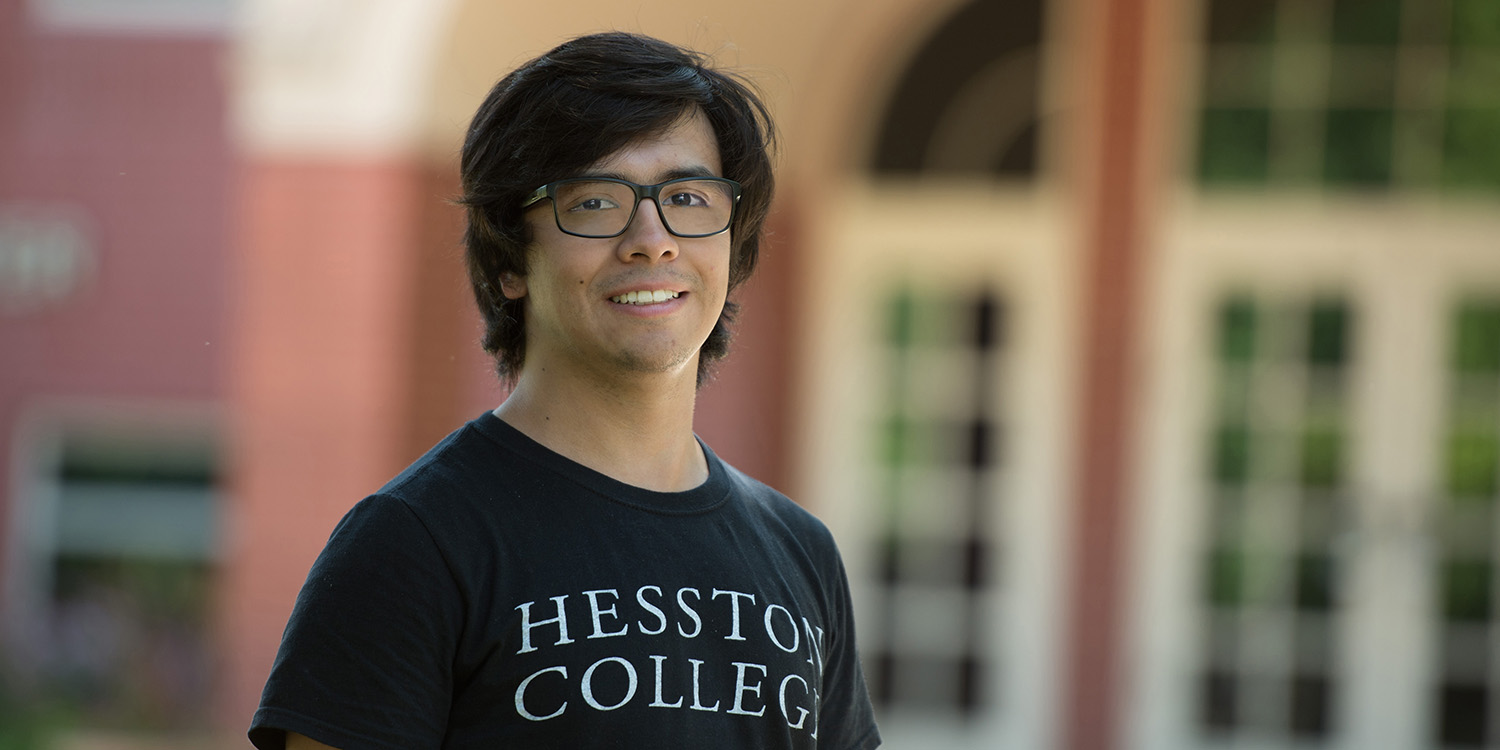
Hesston, Kansas is used to seeing young adults from around the globe through the many international students who attend Hesston College every year. But David Cortes’ purpose in Hesston was a little different.
He came from his home in Colombia to serve, to work, to immerse himself in the community and to come to deeper understanding of what service to the world looks like. A very similar set of values and goals Hesston College holds.
Cortes was hosted by Hesston College for almost a year as a participant in Mennonite Central Committee’s (MCC) International Volunteer Exchange Program (IVEP), a cultural exchange opportunity for young, Christian adults. Instead of focusing primarily on academic study at Hesston College, Cortes put the university background he gained in Colombia to work in the college’s Information Technology (IT) department.
“I like learning about different cultures and languages, and my youth group at home always promoted service, so I was drawn to IVEP because it would give me the opportunity to serve in and explore a different culture,” said Cortes.
Likewise, with an increased emphasis on global engagement, hosting an IVEP participant provided Hesston College with an opportunity to expand cultural understanding for students, faculty and staff alike on its own campus.
David’s role as support staff in IT gave him opportunities to connect with all campus groups – students, faculty and staff. Living off-campus with a host family during the fall semester gave him a connection point to the wider community and a local church, Whitestone Mennonite Church. Even though he finished his university degree from a distance in October, he also took a few classes and ate lunch with students which resulted in new friendships. Moving on campus for the spring semester allowed those relationships to deepen even further.
“Even though my role on campus was different from a typical student, I made friends with students from all over the world,” said Cortes. “I was excited to find such a large population of international students and I enjoyed being able to share and connect with people from so many countries, cultures and backgrounds.”
Cortes admits that his initial reaction to his placement in Hesston was accompanied by some apprehension.
“I wasn’t sure about being surrounded by American students,” Cortes said. “I had an image of extravagant American culture and focus on possessions, but when I got here and began to connect with people and understand life here, I found similarities to Colombia. We have the same kinds of struggles and fears and hopes and aspirations. My ideas of Americans as strict and serious also changed when I only found warm, friendly and welcoming people.”
That kind of discovery of a common humanity across the globe is what Hesston College anticipates will be an outcome for students of the transcultural experiences and other global engagement opportunities that are increasingly becoming part of the student experience.
As he reflected on the experience on his last day on campus on Tuesday, Cortes said overall the year helped him grow both professionally and personally.
“This was my first job after university and the most serious work I’ve had,” he said. “I learned what it’s like to have professional responsibilities that others rely on me to complete. Overall, I feel like I’m part of something bigger than just myself and the reality I’ve always known. It motivates me to work harder and do whatever I can to serve others. I’ve really appreciated the experience.”
Avalos, Hartley named Lark Athletes of the Year
General
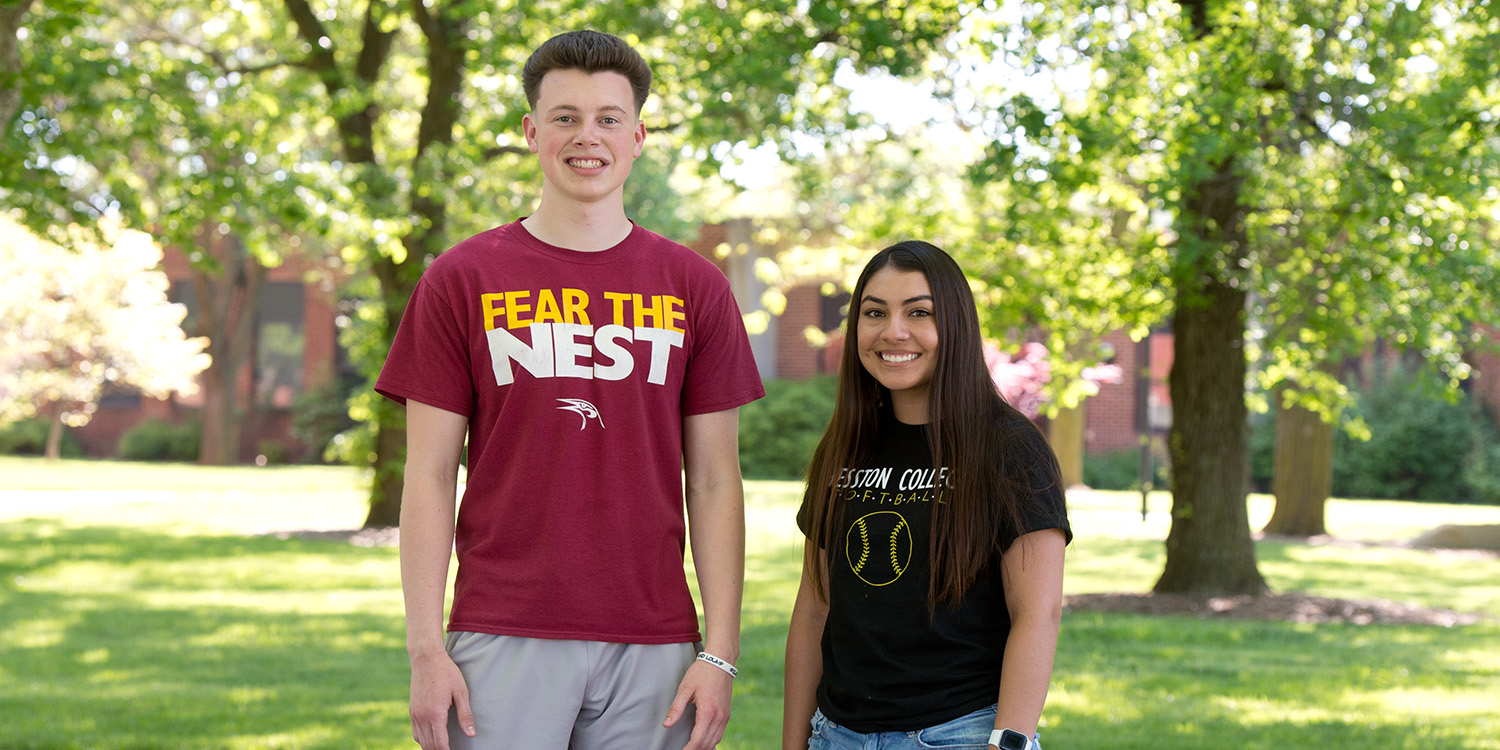
The Hesston College athletic department announces the 2018-19 Male and Female Athletes of the Year, Lexi Avalos and Cal Hartley. Avalos was an outfielder for the Lark Softball Kansas Jayhawk Community College Conference (KJCCC) regular season champions and Hartley was a guard for the men’s basketball team.
Avalos stepped up to help lead the softball team to the best season in school history. She was first team all district and second team conference, her second all-district selection. She ended the year with 53 hits including two home runs. Avalos scored 35 and finished with 55 RBIs. For her career she tops the Larks with 118 hits over her two years. Avalos is a nursing major who will be a two time Academic-All American.
“Lexi was unquestionably our team leader, something she did not ask for,” said coach Andrew Sharp. Avalos will continue her education at Hesston College as she plans to get her Bachelor of Science in Nursing degree.
Cal Hartley had a great year for the Lark men’s basketball team. He was a captain and leader on and off the court. Hartley earned second team in both the KJCCC and the NJCAA Region. In the NJCAA Cal ranked 8th Nationally in 3-pointers made (108) and 4th in free-throw percentage (88.1). He sits in the top 10 of the Hesston College all-time leaderboard in several categories including three pointers shot, three point shooting percentage and minutes played. Hartley is also a two time NJCAA Academic-All American with a 4.0 GPA. He will attend Drury University where he will continue his studies in business and play basketball.
General
Hesston College announced the names of full-time students whose spring 2019 semester grades earned them a place on the Dean’s List (3.90 to 4.00) and Honor Roll (3.50 to 3.89).
Dean’s List – First-year
Gabriella Audrey, Semarang, Indonesia
Willow Baer, Marshallville, Ohio
Erin Beachy, Middlebury, Ind.
Sabrina Bellar, Conway Springs, Kan.
Jessica Buckwalter, Yona, Guam
Simone Burgess, Los Angeles, Calif.
Matthew Byler, Shipshewana, Ind.
Levi Geyer, Oxford, Iowa
Dimitri Giannakopoulos, Cypress, Texas
Brett Heitschmidt, Lindsborg, Kan.
Alyssa Hershberger, Wellman, Iowa
Mio Hirata, Kani, Japan
Hannah Klusman, Ford, Kan.
Jaden Lais, Grantsville, Md.
Sadie Leatherman, Kouts, Ind.
Brayan Martinez, Soyapango, El Salvador
Rachel Miller, Freeman, S.D.
Masataka Miyake, Tatebayashi, Japan
Jo Anne Mulatre, Hinche, Haiti
Michael Mullet, Lagrange, Ind.
Jonathan Ortiz, Wichita, Kan.
Tobie Plett, East St. Paul, Manitoba, Canada
Raelynn Reeves, Abilene, Kan.
Justus Sneary, Harrisonburg, Va.
Rei Vuksani, Tirana, Albania
Ellie Yoder, Seattle, Wash.
Dean’s List – Sophomores
Erica Baer, Wooster, Ohio
Lucas Comfort, Salina, Kan.
Jenna Denlinger, Lancaster, Pa.
Will Gaby, Goshen, Ind.
Jade Gleason, Brush, Colo.
Annalys Hanna, Fraser, Colo.
Grant Harding, Louisburg, Kan.
Cal Hartley, Benton, Kan.
Kaylen Haynes, Trophy Club, Texas
Jaden Hostetter, Harrisonburg, Va.
Laura Huang, SanMing, China
Leah Huyard, Staunton, Va.
Kylee Kasselman, Claflin, Kan.
Hugo Kinebuchi, San Diego, Calif.
Cassidy King, Cochranville, Pa.
Ivonne Ledesma, Wichita, Kan.
Chris Lichti, Shickley, Neb.
Taylor Longenecker, Rockingham, Va.
Jenna Magana-Garcia, Hutchinson, Kan.
Faith Manickam, Hesston, Kan.
Lindsay Manwell, Wichita, Kan.
Sophie Miller, Goshen, Ind.
Rio Mori, Osaka, Japan
SungHyoun Nam, Gyounggi-do, South Korea
Joel Plank, Syracuse, Ind.
Dylan Brubaker Slabach, Harrisonburg, Va.
Zachary Smisor, Valley Center, Kan.
Hudson Smith, Waukomis, Okla.
Sarah Teeter, Hesston, Kan.
Lily Wait, Parker, Colo.
Dean’s List – Juniors
Ashley Call, Wichita, Kan.
Nicole Cutler, Hutchinson, Kan.
Autumn Gehman, Adams, Tenn.
Arianna Herrick, Moundridge, Kan.
Kallie Provost, Wichita, Kan.
Sally Wilson, Wichita, Kan.
Dean’s List – Seniors
Kristy Bell, Andover, Kan.
Kaitlin Diaz, Wichita, Kan.
Krystan Miller, Hutchinson, Kan.
Sophia Miller, Newton, Kan.
Ashley Rohleder, Salina, Kan.
Vanessa Steckly, Milford, Neb.
Lilian Trifena, Tangerang, Indonesia
Megan Thomason, Independence, Mo.
Honor Roll – First-year
Jacob Bontrager, Smithville, Ohio
Thomas Brown, Valley Center, Kan.
Muskan Budha Magar, Ghorahi Dang, Nepal
Alik Gillman, Lanesville, Ind.
Trey Greening, Wichita, Kan.
Kyoya Himori, Yamamoto, Japan
Disleve Kanku, Lubumbashi, Democratic Republic of Congo
Voldie Kanku, Lubumbashi, Democratic Republic of Congo
Sarah Keck, Topeka, Kan.
Ellena Lehman, York, Pa.
Dane Milburn, Lincoln, Neb.
Reese Nebel, Hesston, Kan.
Amber Petrie, Murdock, Kan.
Parris Rawls, McKinney, Texas
Mackenzie Smith, Richmond, Texas
Stephen Waltner, Freeman, S.D.
Dayton Watkins, Valley Center, Kan.
Laurine Yeboah-Appiah, Lancaster, Pa.
Ejona Zogu, Lezha, Albania
Honor Roll – Sophomores
Alexis Avalos, Yucaipa, Calif.
McKenzie Brown, Estes Park, Colo.
Rina Fukada, Yokohama-shi, Japan
Risa Fukaya, Kanagawa-ken, Japan
Faith Hallmark, El Dorado, Kan.
KaDrea Hulett, Atlanta, Ga.
Denazia Jeffers, McKinney, Texas
Lily Kauffman, Mountain Lake, Minn.
Misato Kawamoto, Ibaraki-ken, Japan
Kaylen Lassley, Salina, Kan.
Ian Lecki, Overland Park, Kan.
Mariana Martinez Hernandez, Tegucigalpa, Honduras
Brant McCune-Wall, Manhattan, Kan.
Jared Oyer, Hubbard, Ore.
Kendall Pelton, Cheyenne Wells, Colo.
Camryn Roth, Canby, Ore.
Seth Rudeen, Osage City, Kan.
David Ryan, Tulsa, Okla.
Jenna Schneider, Lodi, Calif.
Kenton Schroeder, Harper, Kan.
Malachi Swartz, Overland Park, Kan.
Samantha Trejo, Lyons, Kan.
Honor Roll – Juniors & Seniors
Jacob Aich, Hutchinson, Kan.
Hannah Brewster, El Dorado, Kan.
Lauren Clark, Sedgwick, Kan.
Jennifer Decker, Newton, Kan.
Makenzie Farnham, Little River, Kan.
Lora Ferguson, Hesston, Kan.
Nicole Loewen, Hutchinson, Kan.
Katherine Ropp, Hutchinson, Kan.
New logo to represent Lark Athletics
General
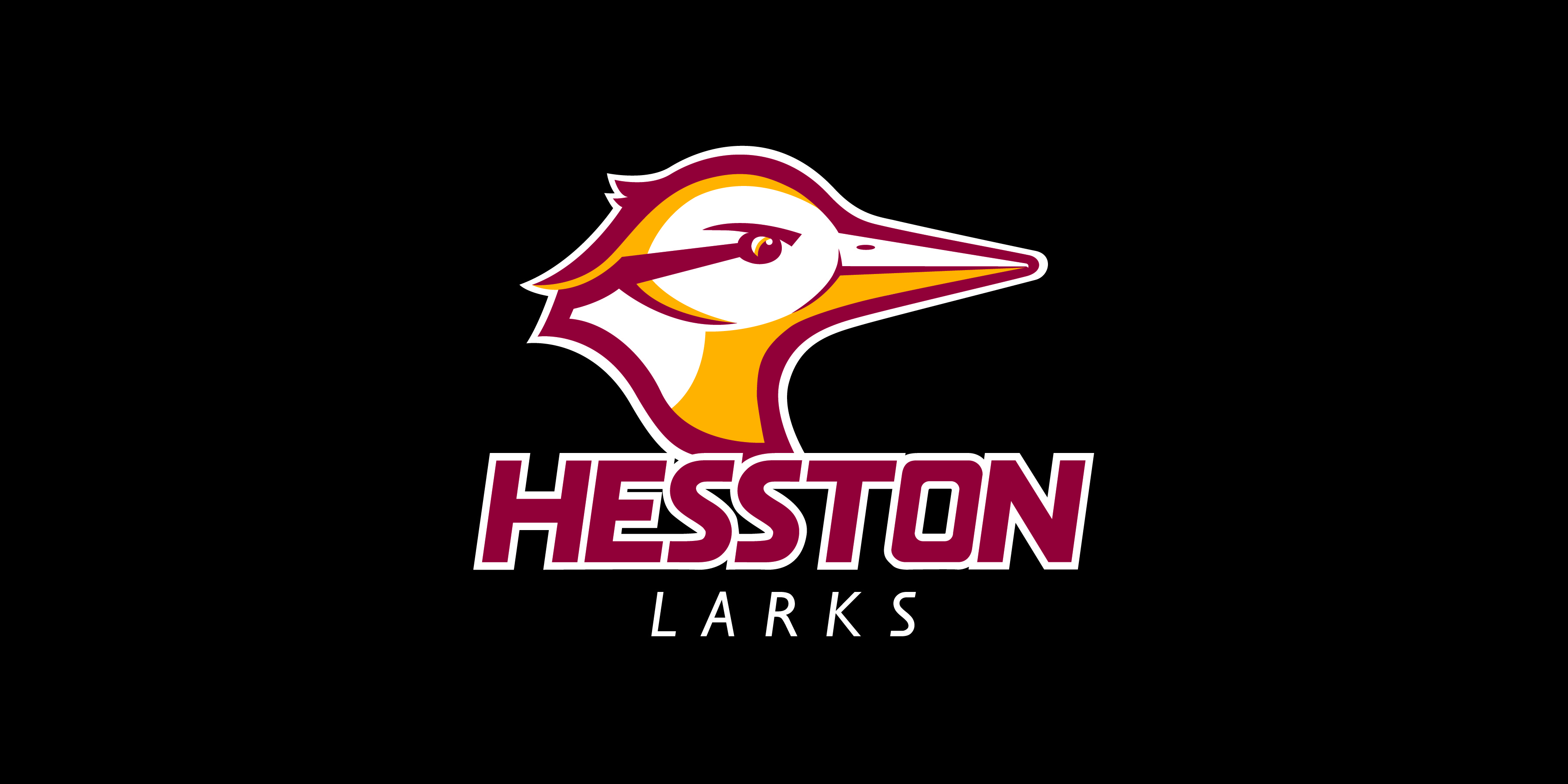
Hesston College and Lark Athletics unveiled a new, official logo on Friday, replacing the existing mark that has represented the brand since 2004. The new logo refreshes the Lark head with an updated and classic appearance.
“There are exciting changes happening within Hesston College Athletics, and the new logo is a part of those improvements,” said Rachel McMaster, Director of Marketing and Communications. “With several major athletic facility projects in the works, this was a good time to also give the Lark a more modern look.”
Hesston College is in the midst of major renovations and additions to some of the athletic facilities, including a renovation of the Yost Center gymnasium, as well as the addition of a new building entry and a weight room and fitness center that will be available to both Lark student-athletes and the wider student population. A new on-campus softball field is also in construction, and a new athletics website is planned for a late summer rollout.
The new Lark and other elements of the new athletics visual brand, including a customized font, was created by Hesston College graphic designer Marissa Unruh over the 2018-19 year.
“We wanted the new Lark to be a representation of Hesston College and Lark Athletic values,” said Rachel McMaster, Director of Marketing and Communications. “Our goal with the new logo was to portray personality and determination while holding true to the features of the Kansas state bird the Hesston College Lark represents and maintaining connection points to the outgoing Lark.”
Hesston Athletics will start implementing the new logo immediately, with expectations of an ongoing process over the next few months and beyond. Roll-out celebrations will be planned on campus with the start of the 2019-20 academic year in August.
Hurst to lead Hesston College spiritual life
General
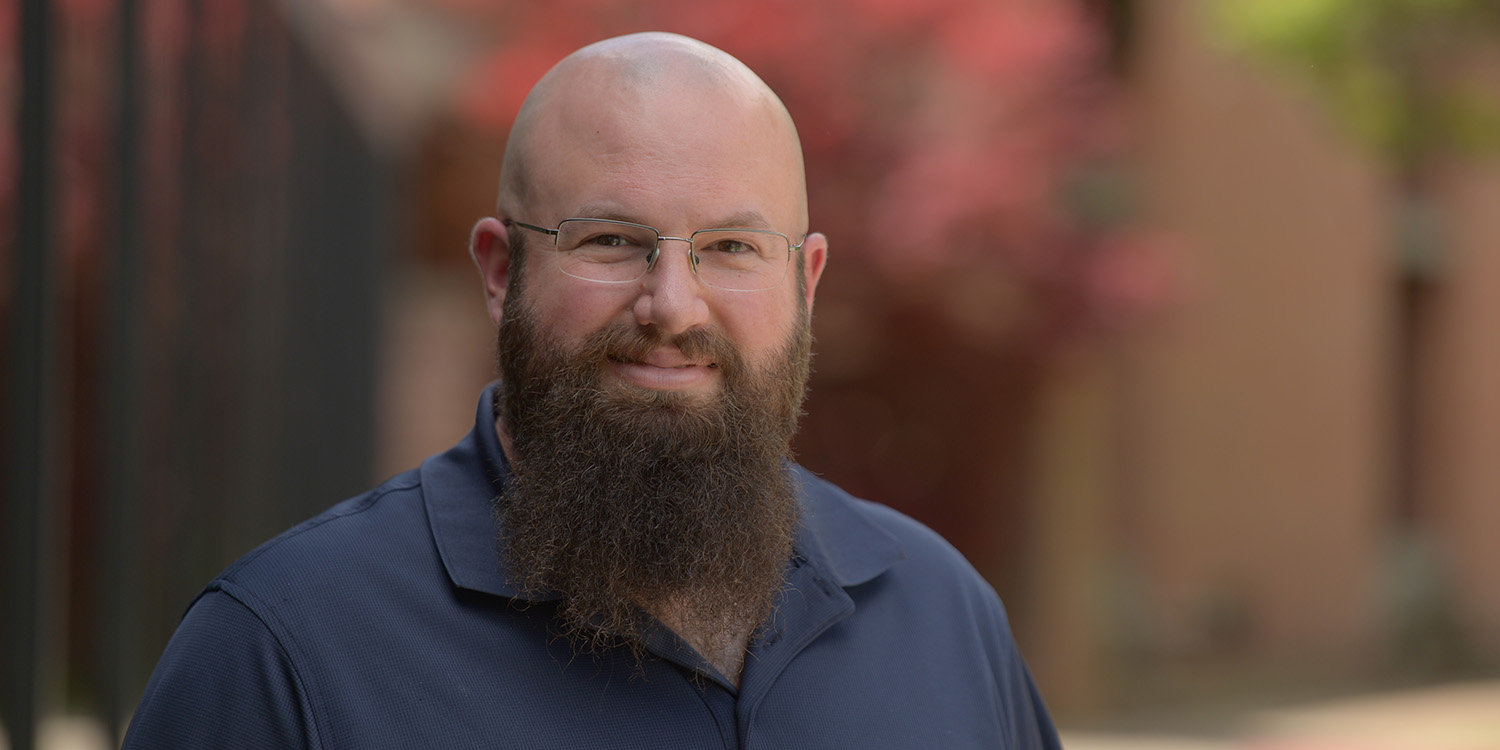
Hesston College announces the appointment of Micah Hurst as campus pastor. Hurst’s work experience reflects a passion for youth and the ministry of young adults. He will join the Hesston community in mid-July.
Hurst is a graduate of Hesston College, earning an associate of arts in Bible with a youth ministry concentration in 2000. He then completed a bachelor of science in camping, recreation and outdoor ministries from Eastern Mennonite University (Harrisonburg, Va.) and a master’s in church leadership from Eastern Mennonite Seminary.
Since 2015, Hurst has served as Associate Pastor of Youth and Young Adults at Weavers Mennonite Church in Harrisonburg, Va., as well as a Ministry Affiliate with Eastern Mennonite University (EMU) for the last year. Other experiences include youth pastor work and summer camp ministry staff positions. Hurst also spent four years serving as a youth work coordinator in Tasmania, Australia, and a year serving as a ministry servant and youth ministry consultant with organizations in Sydney, Australia.
Hurst succeeds Todd Lehman, who served Hesston College as campus pastor for 11 years.