
Sophomores to perform recitals
Music
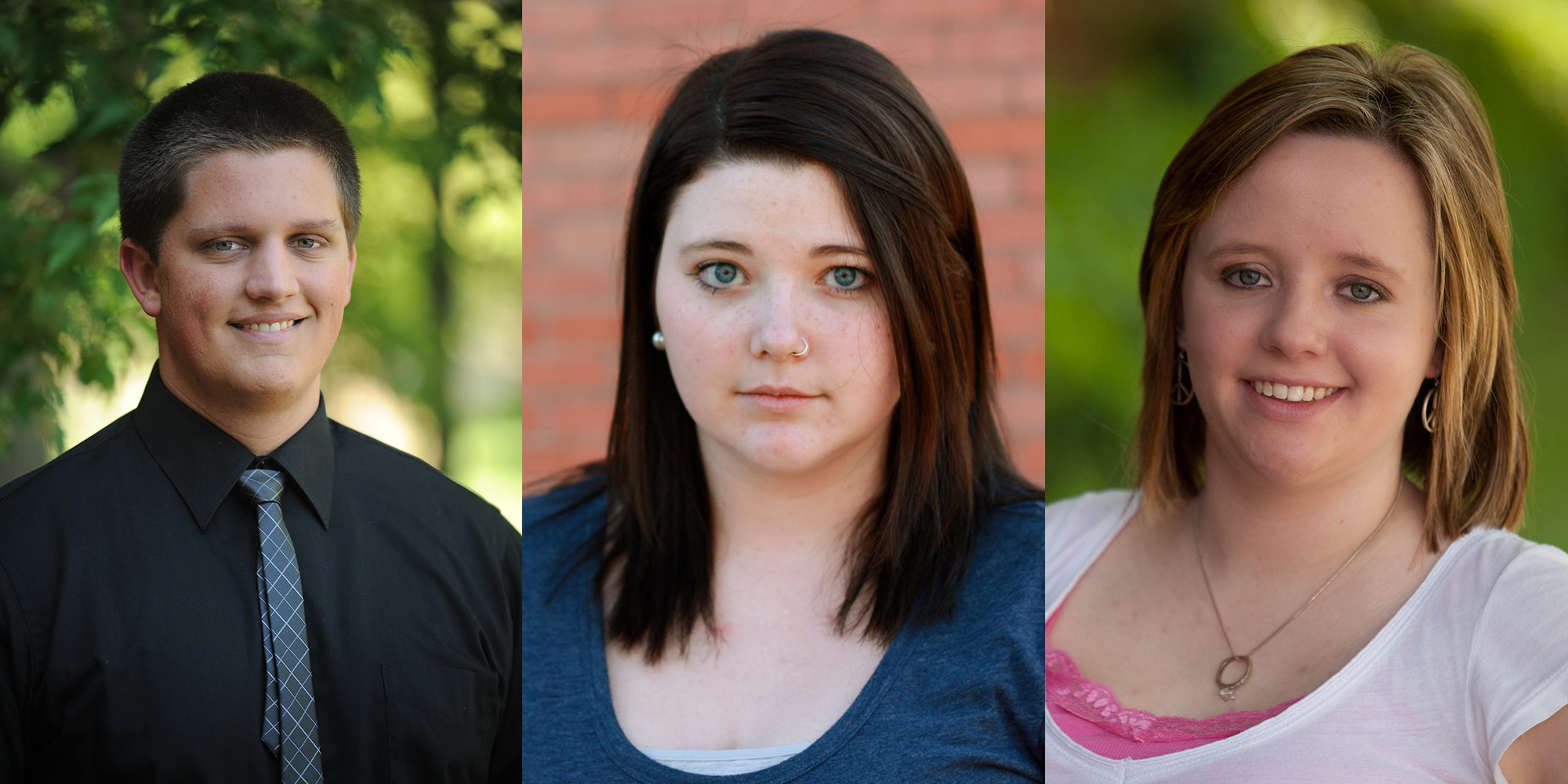
Hesston College sophomore music students will perform voice recitals during Commencement Weekend. Michael Darby and Melody Marshall will perform at 9 p.m. May 4 in the Hesston Mennonite Church sanctuary. Libby Waltner will perform at 1 p.m. May 5 in the Northlawn Studio Theatre on the Hesston College campus. The public is invited to attend.
Darby, of Iowa City, Iowa, and Marshall, of Grottoes, Va., have both been members of the Bel Canto Singers, the college’s premiere vocal ensemble under the direction of Bradley Kauffman, for two years. They study voice with Matthew Schloneger.
Darby, the son of Carl and Donna Darby of Iowa City, is also a two-year member of Concert Band under the direction of Kauffman. Marshall is the daughter of Mark and Kelley Marshall of Grottoes.
Darby and Marshall’s performance will include works by Handel, Carissimi, Mozart and musical theatre selections. Ken Rodgers will provide piano accompaniment.
Waltner, of Hurley, S.D., has been a member of the Hesston College Chorale under the direction of Rodgers for two years. She is also a two-year member of Concert Band and studies voice with Schloneger. She is the daughter of Kevin and Amy Waltner of Hurley.
Waltner’s performance will include works by Faure and Handel and feature selections from several musicals. Rodgers will provide piano accompaniment.
Hesston College to celebrate 2012 graduates May 6
General
Hesston College will celebrate the class of 2012 with the 102nd commencement ceremony at 9 a.m. Sunday, May 6, in Yost Center.
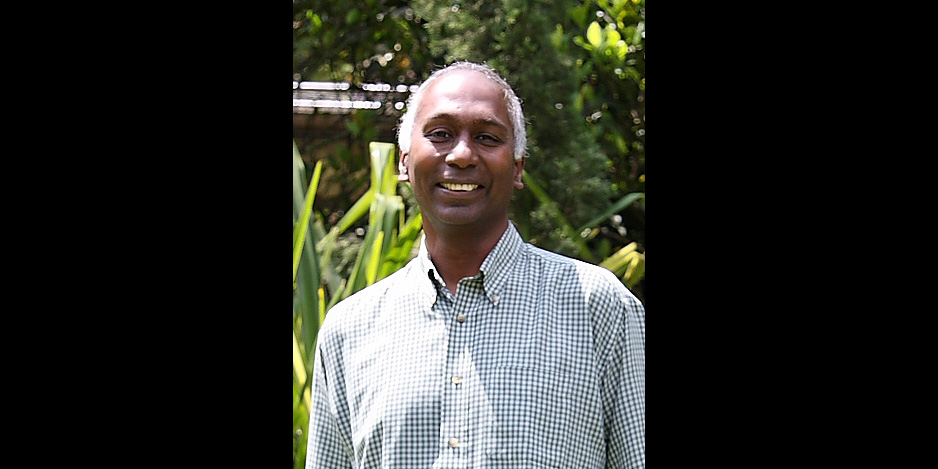
Joe Manickam, a 1987 Hesston College graduate, will present the commencement address “Back to Basics,” based on the college’s 2011-12 theme verse from Micah 6:8.
Manickam of Lancaster, Pa., serves as director for Asia programs for Mennonite Central Committee. He served as associate director of Admissions at Hesston College from 1991 to 1996 and as associate director at the Center for Anabaptist Leadership in Pasadena, Calif., from 1996 to 2005.
Student speakers for the ceremony are Hannah Bachman of Tiskilwa, Ill., and Zach Baumgartner of Hesston, Kan.
The class of 2012 will be recognized for its accomplishments during Larkfest at 7:30 p.m. May 5 in the Hesston Mennonite Church sanctuary on the Hesston College campus. A reception will follow in the Community Center.
Academic departments will recognize graduates in ceremonies May 5. Disaster Management students will be recognized at 9 a.m. in Kropf Center, room 150.
A pinning ceremony for nursing students will be at 10 a.m. in the Hesston Mennonite Church and Community Center. Kristina (McMillen) Ibitayo, Ph.D., RN, and a 1985 Hesston alumna will be the featured speaker. She is the clinical assistant professor at the University of Texas at Arlington College of Nursing and editorial assistant for “Journal of Child and Adolescent Psychiatric Nursing.”
Pastoral Ministries commissioning will be at 1 p.m. in the Hesston Mennonite Church sanctuary. Reverend Geniese Stanford, lead pastor at Hesston United Methodist Church, will be the featured speaker.
Aviation and Air Traffic Control students will be recognized during a 2:30 p.m. reception in the Bontrager Student Center.
Other weekend events include a Band Concert at 8 p.m. May 4 in the Bontrager Student Center and sophomore recitals by Michael Darby (Iowa City) and Melody Marshall (Grottoes, Va.) at 9 p.m. in the Hesston Mennonite Church sanctuary. Libby Waltner (Turkey Ridge, S.D.) will perform her sophomore recital at 1 p.m. May 5 in the Northlawn Studio Theater. The European Chorale will perform a bon voyage concert entitled “Meditations and Illuminations” at 4 p.m. May 5 in the Hesston Mennonite Church sanctuary. The concert is a precursor for the choir’s tour of the Netherlands, Germany, Switzerland, France and Spain May 8 to 29.
For a full weekend schedule or more information, visit the Hesston College website at www.hesston.edu/commencement or call Alumni and Church Relations locally at 620-327-8109 or toll-free at 866-437-7866.
Hesston College reflects on year during Kansas Private College Week
General
Hesston College will recognize April 16 to 22 as Kansas Private College Week based on a proclamation issued by Governor Sam Brownback.
Hesston College is one of 18 independent colleges and universities that form the Kansas Independent College Association to be recognized during the week.
According to the proclamation, the KICA member schools enroll 22,000 students each year in undergraduate and graduate programs and combine for more than 200,000 living alumni – half of whom live and work in Kansas.
Hesston College is the only two-year liberal arts college in the state of Kansas. Hesston was founded in 1909 and is affiliated with Mennonite Church USA. Enrollment for the 2011-12 year is 468 students representing 27 states and 14 countries.
Hesston College offers students hands-on practical experiences in their first two years of college to help prepare them for future educational and career pursuits.
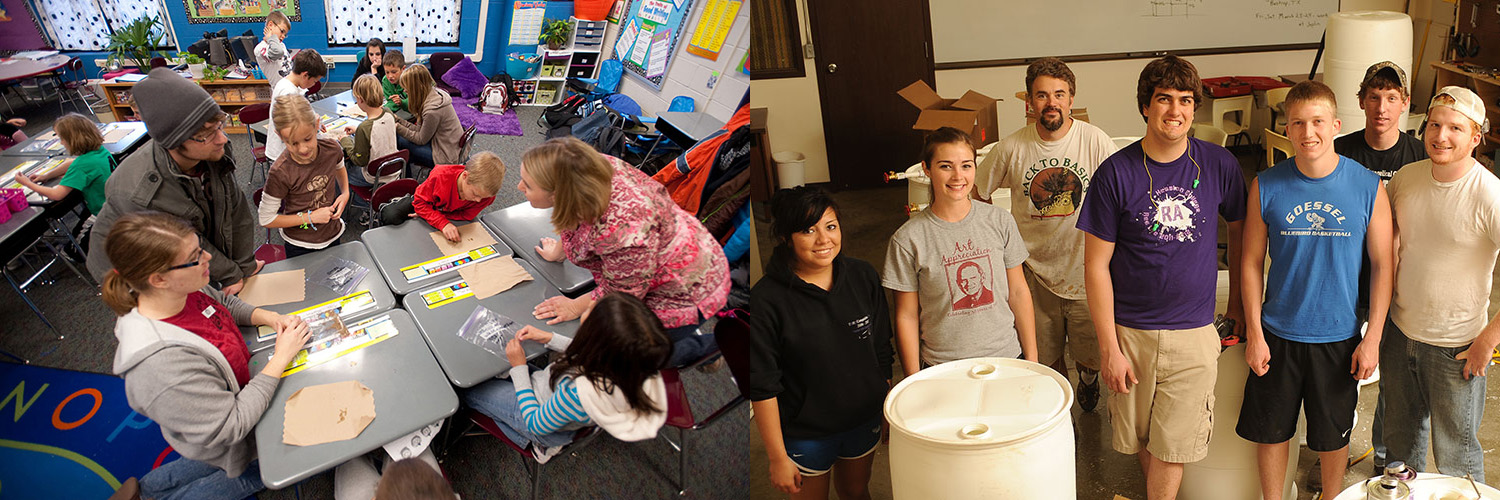
(left) Hesston College Environmental Biology students work with Hesston Elementary third graders to prepare wildflower seeds for winter dormancy. The college and elementary students worked together three times throughout the fall 2011 semester to prepare for a prairie planting at the elementary school in the spring. Pictured from left are Hesston College freshmen Sarah Geiser of Apple Creek, Ohio, Logan Blackford of Orrville, Ohio, Alex Martin, Drew Hiebert, third grade teacher MeLissa Dryzmalla and Mariana Martinez; (right) The Hesston College Entrepreneurship class takes a break from turning 55-gallon food-grade drums into rain barrels. Pictured from left are sophomores Brenda Nieto-Montoya (Three Rivers, Mich.), Mallory Schroeder (Newton, Kan.), business instructor David LeVan, Kyle Albrecht (Clarence, N.Y.) and Hayden Goerzen and freshmen Matt Weaver (Goshen, Ind.) and Brandon Sharkey (Goshen, Ind.). Class member not pictured is sophomore Miranda Hilliard (Sedgwick, Kan.).
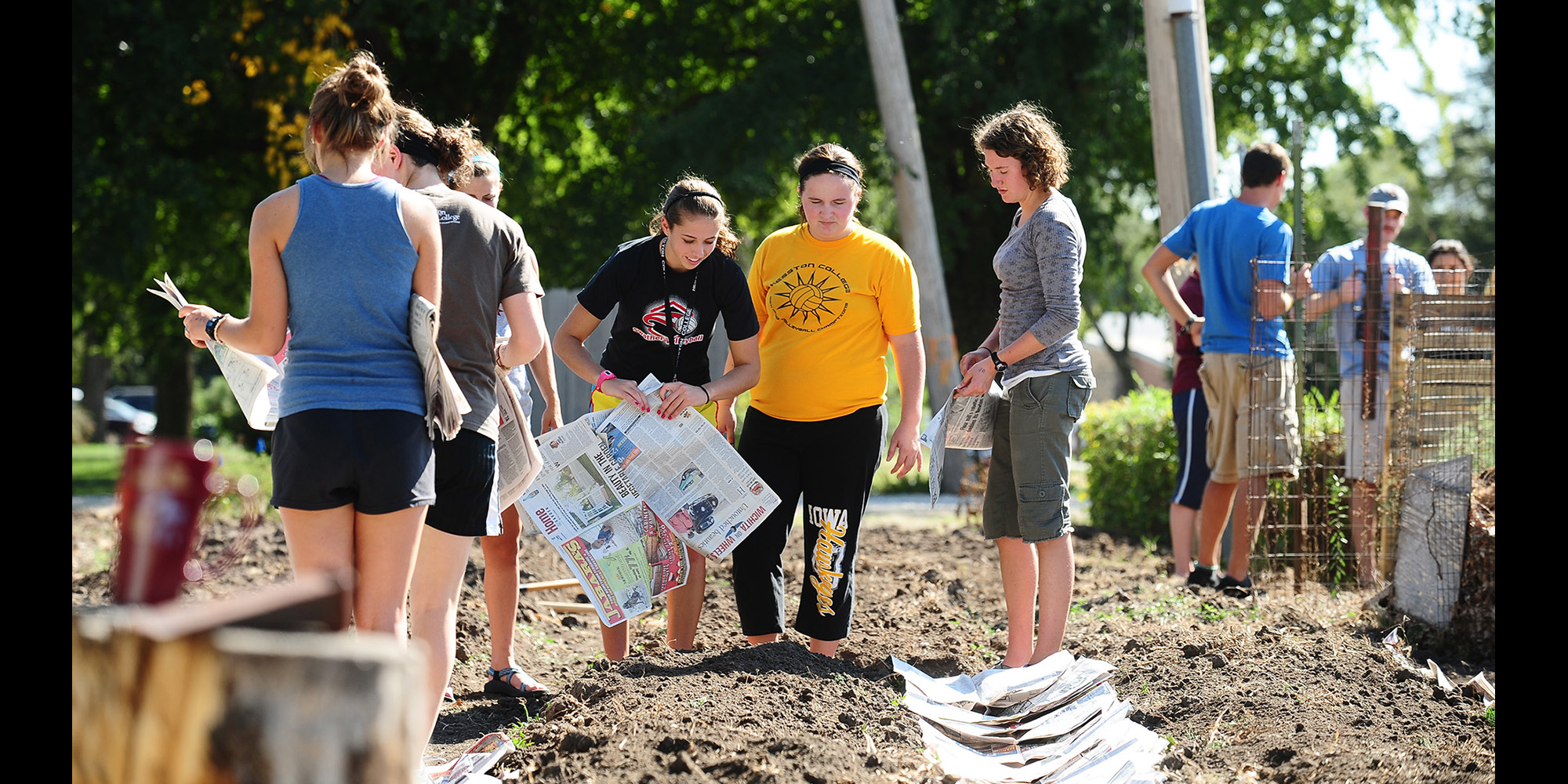
During the 2011-12 academic year, students studying in various departments were given unique opportunities to explore their interests. Environmental Biology students worked with kindergartners and third graders at Hesston Elementary School on a prairie plant restoration project.
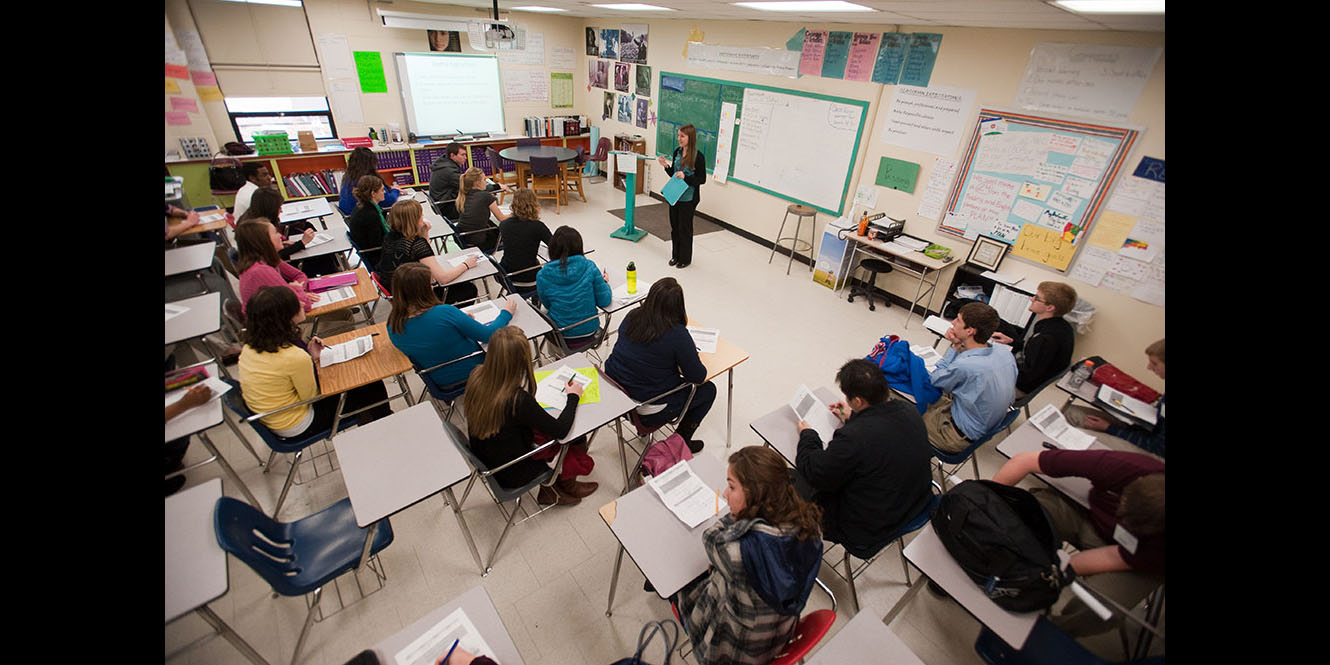
Education majors explored differences in education with a day trip to Central Junior and Senior High School in Tulsa, Okla. While there, they observed in classrooms, presented on preparing for college and reviewed standardized test objectives.
Students enrolled in Entrepreneurship class during the spring semester created and are operating a business for three weeks manufacturing and selling recycled rain barrels. All of the profit earned from the sale of the rain barrels will be donated to Mennonite Central Committee to help with relief efforts in countries around the world.
Students in the spring semester Physics II class built an electric bicycle and solar bicycle charging station.
The theatre department presented two full-length productions – “The Boys Next Door” during the fall semester and Shakespeare’s “A Midsummer Night’s Dream” during the spring semester. Students enrolled in the Music Theatre Workshop also presented a program of showtunes and musical scenes. Student-directed one-act plays will be presented during commencement weekend in May.
The music department held performances in local churches and schools and in 11 states across the country during choir and Concert Band tours. The 37-voice European Chorale will travel to five European countries May 8 to 29 during the biennial European tour.
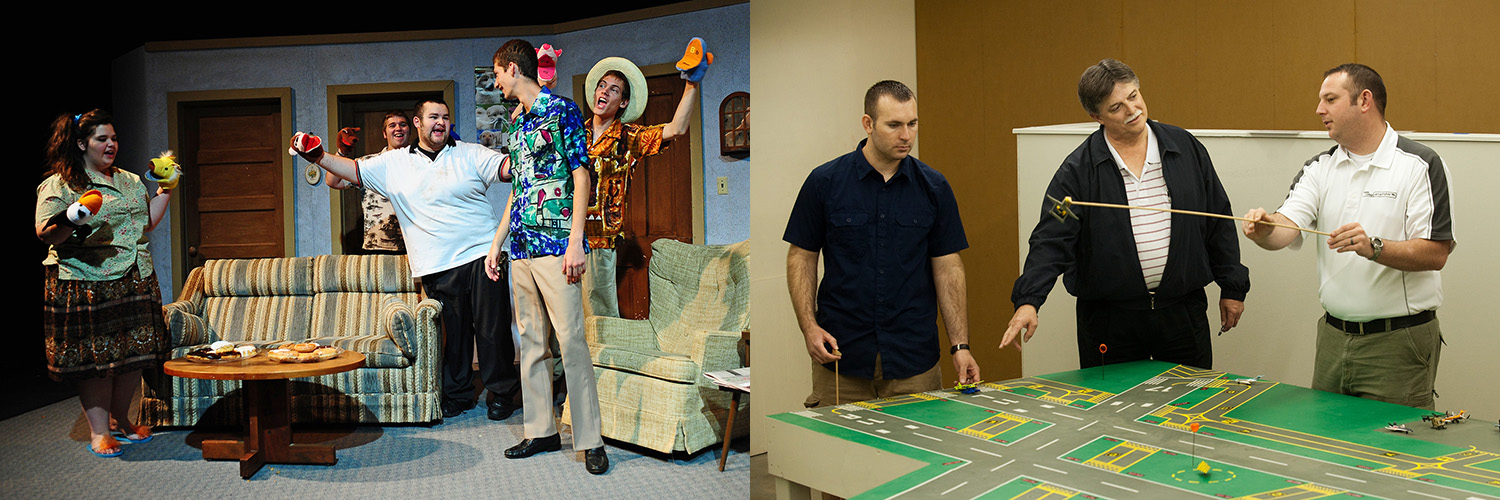
(left) The cast of the fall 2011 theatre production “The Boys Next Door” rehearse a scene. Pictured from left are freshmen Deni Brummer (Hutchinson, Kan.), Simeon Taylor (Girard, Kan.), Cameron Ponce (Elkhart, Ind.), Nathan Bray (Canton, Kan.) and David Rudy (Manheim, Pa.); (right) Jerry Holloman (left) and Jacob Gayer (right), members of Hesston College’s first class of Air Traffic Control graduates in May 2011, work with Director of Aviation Dan Miller in the on-campus table model simulation lab.
Students in the college’s 10 two-year degree programs continue to receive quality education and training as they prepare for the workforce. The nursing program continues to be one of the strongest in the state with a 98 percent pass rate for more than 40 years.
In May 2011, the college recognized its first graduates in Air Traffic Control. Hesston became part of the Federal Aviation Administration’s Air Traffic Collegiate Training Initiative programs in April 2010. Hesston is the only college in Kansas, and one of only 36 nationwide, to receive FAA certification for Air Traffic Control. Aviation remains a strong program with 45 students, including 12 Air Traffic Control students enrolled at the beginning of the year.
The college focused on sustainability efforts and green initiatives on campus in 2011-12. The renewed interest in environmental care was spearheaded by the First Year Experience class and a campus-wide common read “No Impact Man” (Picador, 2010) by Colin Beavan. In September, the college recognized its first “No Impact Week,” which provided events and opportunities for the campus community to experiment with sustainable living and care of the environment on campus and in their personal lives. The college also became a member of the Association for the Advancement of Sustainability in Higher Education to further efforts toward building a healthy and just world.
Hesston offers more than 50 programs for transfer, including five pre-professional programs, as well as 10 two-year degree programs, making the college a viable option for traditional and non-traditional students.
The college hosts various educational and cultural events for the public on campus and at Dyck Arboretum of the Plains throughout the year.
With 166 employees, the college is the fourth largest employer in the city of Hesston, and through student involvement maintains connections with other local organizations including Schowalter Villa, the Hesston College Preschool and U.S.D 460.
Governor’s proclamation
TO THE PEOPLE OF KANSAS, GREETINGS:
WHEREAS, There are 18 private non-profit colleges in Kansas, enrolling 22,000 undergraduate and graduate students each year; and there are over 200,000 living alums—half of whom live and work in Kansas; and among these alums are some of the state’s most important civic, business and cultural leaders; and
WHEREAS, Kansas private colleges award over $120 million in institutional grants and scholarships to students annually; and 20% of the state’s bachelors degrees and 29% of the state’s masters degrees are awarded to students attending private colleges; and
WHEREAS, Kansas private colleges are major employers in many smaller communities and enrich those communities with an array of cultural and community education events, contributing significantly to the quality of life; and
WHEREAS, Kansas private colleges routinely invest significant financial resources in the economies of their local communities and the state through annual budgets and major construction projects; and
WHEREAS, Kansas private colleges promote civic engagement and leadership development of student through extensive community service and internship/work study programs, and provide educational programming and campus culture that places a priority on the development of personal character and ethical practice;
NOW, THEREFORE, I, SAM BROWNBACK, GOVERNOR OF THE STATE OF KANSAS, do hereby proclaim April 16 – 22, 2012, as
KANSAS PRIVATE COLLEGE WEEK
in Kansas and urge all citizens to join in this observance by recognizing the important contributions of private colleges in the state.
Bible and Ministry
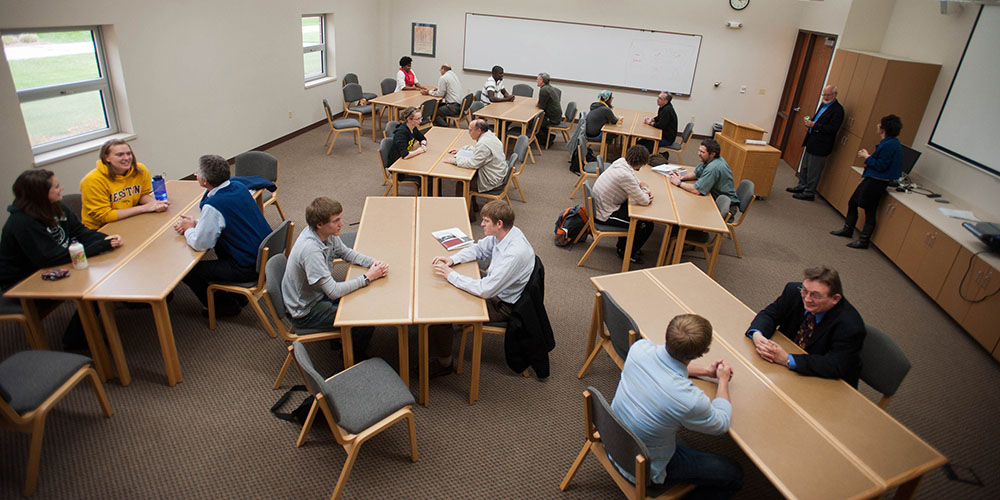
Bible teachers from nine Mennonite high schools visited Hesston (Kan.) College and Bethel College (North Newton, Kan.) April 12 and 13. Hesston College Bible instructor Michele Hershberger devised an interesting method to introduce the Bible teachers to Hesston’s program. She invited a group of students to share their Hesston Bible course experiences with the teachers in the format of speed dating. The teachers made their way around the room with about three minutes to interview each student. Hershberger invited a broad range of students to participate, from conservative to progressive in theology and including some who identify themselves as agnostic.
“Students got to honestly share about their experiences in our Biblical Literature course,” Hershberger said. “It sparked conversations among the Bible teachers and Marion (Bontrager, also a Hesston Bible instructor) and me. The teachers loved interacting with our students and were impressed with their openness, and it provided each of us an opportunity to reflect on our teaching ministry. After the students left, our discussion focused on teaching methods using digital technology in the classroom as well as the challenges of teaching Bible to students with a broad range of Bible knowledge bases and faith experiences.”
In addition to Mennonite Schools Council teachers meetings, the group spent a day on Hesston’s campus and a day on Bethel’s campus. They met with administrators and Bible faculty, attended classes and convocation and took campus tours.
At Bethel, the visit coincided with “live music night” at the campus coffee shop, Mojo’s, which happened to feature Christine Crouse-Dick, Bethel associate professor of communication arts, and her husband, Christopher Dick, professor at English at Tabor College, as The Misguided Professors. The pair played and sang with Bethel junior Landon Bartel on string bass, Jesse Graber on fiddle and local pastor Eric Massanari on percussion.
Hesston-Bethel Performing Arts to host The Rose Ensemble for concert and residency
Music
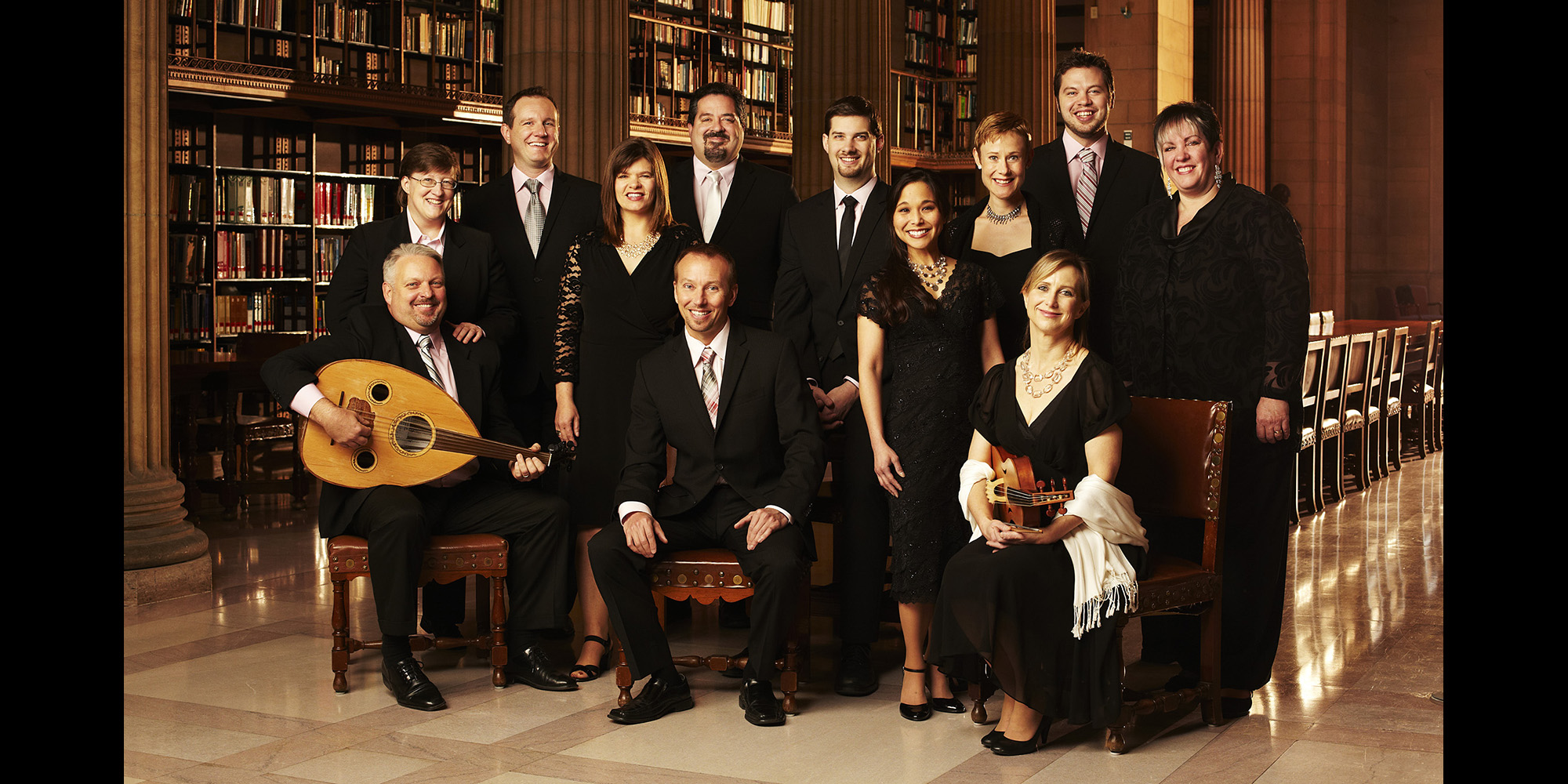
The culminating event of the 2011-12 Hesston-Bethel Performing Arts series will feature The Rose Ensemble, one of America’s premiere choral groups, for a three-day residency and program entitled “Land of Three Faiths: Voices of Ancient Mediterranean Christians, Jews and Muslims” at 7:30 p.m. April 27 in the Hesston Mennonite Church sanctuary on the Hesston College campus.
Based in St. Paul, Minn., The Rose Ensemble reawakens the ancient through imaginative performances of vocal music with historical instruments and a vocal sound critics have called “supernatural.” Their repertoire spans 1,000 years and 25 languages of vocal music and offers fresh perspectives on history, languages, politics, religion and world cultures and tradition.
“The Rose Ensemble brings music to new life with exquisite musicianship and thoroughly researched historical performance practices,” said HBPA Director Matthew Schloneger.
“Land of Three Faiths” is the result of years of intensive research and training featuring instruments and musical ideas that blur the lines between Arabic and European. It encompasses sacred, secular, folk and classical traditions for an exploration of language, spirituality and cultural exchange of the Abrahamic faiths in the Hispano-Arabic Middle Ages – an important and devastating chapter of Judaic, Christian and Islamic history. The program mingles together laments of the Sephardic Jews, Arab-Andalusian dances, Spanish court songs, Hebrew cantillation, Gregorian chant and Sufi poetry.
“I was able to see The Rose Ensemble perform this program at a sold-out concert in their home city,” said Schloneger. “I was amazed at the beauty and accessibility of the music. We live in a time where the intermingling of different faiths and cultures is such an important aspect of our world. This program gives us a unique insight to a time and place that was not so different from our own.”
The ensemble has produced nine critically acclaimed recordings and was winner of the 2005 Chorus America Margaret Hillis Award for Choral Excellence. The group’s concerts and recordings have been called “first class” (Neuss-Grevenbroicher Zeitung), “impassioned and brightly alive” (Choral Journal) and “engaging… satisfying” (Gramophone). Founder Jordan Sramek received the 2010 Louis Batto Award from Chorus America “for entrepreneurial zeal.”
The Rose Ensemble performs concerts regularly as well as providing educational programs for elementary through college students, libraries and communities.
The Rose Ensemble’s April 25 to 27 HBPA residency will include a free public performance at Hesston College chapel at 11 a.m. April 25 in the Hesston Mennonite Church sanctuary and a free public choral master class with the Hesston College and Bethel College choirs at noon April 25 in the Bethel College Administration Building Chapel. They will also give educational performances at Goessel Elementary School and Northridge and Sunset elementary schools in Newton on April 26.
“We are grateful for significant funding from the National Endowment for the Arts which will allow the ensemble to interact with students and members of our community for three full days,” said Schloneger. “Students will be exposed to new cultures and music in a way that is meaningful and memorable, and that’s exciting.”
Single ticket prices for The Rose Ensemble’s April 27 concert range from $15 to $18, depending on seating section, with discounts available to students and senior citizens.
For more information or to purchase tickets, call 620-327-8158 (Hesston College) or 316-284-5205 (Bethel College), email hbpa@hesston.edu or visit the HBPA website at www.hesston.edu/hbpa.
The program is presented in part by the National Endowment for the Arts, which believes a great nation deserves great art, and the cities of Hesston and North Newton, with generous underwriting by area patrons.
The Hesston-Bethel Performing Arts Series, now in its 30th year, started in 1982 as the Hesston Performing Arts Series (HPA) with funding and planning provided by Hesston College and the Hesston community. In 1998, HPA planners launched a partnership with Bethel College (North Newton) and the name changed to Hesston-Bethel Performing Arts. Hesston College and Bethel College host five performances by world-renowned or regionally acclaimed artists each year.
Hesston College sophomore to perform recital
Music
Hesston College music student Robert Howell will perform a sophomore voice recital at 7 p.m. April 26 in the Hesston Mennonite Church sanctuary on the Hesston College campus. The public is invited to attend.
Howell, of Newton Kan., has been a member of the Bel Canto Singers under the direction of Bradley Kauffman for two years. He studies voice with Matthew Schloneger.
Howell’s performance will include works by Bach, Schumann and Quilter as well as several musical theatre selections. Ken Rodgers will provide piano and organ accompaniment.
Multi-award winning author to speak at Hesston College
General
Award-winning author Marty Essen will present his high-energy, multi-media show “Around the World in 90 Minutes” at 7 p.m. April 22 in the Hesston Mennonite Church sanctuary on the Hesston College campus as part of the college’s Earth Day celebrations. The presentation is free and open to the public.
Essen’s show features interesting facts, humorous stories and the best of thousands of photos he took during three and a half years of traveling the world with his wife, Deb, for his book “Cool Creatures, Hot Planet: Exploring the Seven Continents” (Encante Press, 2007). As they searched for rare and interesting wildlife, the couple swam with piranhas, hiked with the Porcupine caribou migration, had close-up encounters with humpback whales, were surrounded by wolves and survived a hippo attack. Audiences have fun laughing at the stories, admiring the photos and when it’s all done, realizing just how much they’ve learned.
“Marty’s presentation of wildlife and his travels to the seven continents was amazing,” said Katie Leao, coordinator of Student Life at Western Nevada College (Carson City). “His energetic and enthusiastic character brought each picture to life and there is always a fascinating story behind each photo.”
“Around the World in 90 Minutes” began as a show Essen presented in bookstores as part of his first book tour. After numerous refinements, the show took on a life of its own in colleges, museums and nature centers across the United States.
Essen has been the Association for the Promotion of Campus Activities’ most booked college speaker for 37 out of the past 41 months. “Campus Activities Magazine” also named Essen as one of their “Hot Speaker” picks for 2011. He has won multiple book awards for travel and essay writing, including the Benjamin Franklin Award, the Best Books Book Award and the National Indie Excellence Award. He also won first prize at the 2009 Green Book Festival in Los Angeles, and the Minneapolis Star-Tribune named “Cool Creatures, Hot Planet” a top-10 “green” book.
Hesston Mennonite Church is located at 309 South Main Street in Hesston.
Hesston College European Chorale to perform kick-off concerts
Music
The Hesston College European Chorale will kick off its European tour with several local concerts. The 37-voice choir will perform at 7 p.m. Thursday, April 12, in the Schowalter Villa Chapel in Hesston, at 10:30 a.m. Sunday, April 22, at Inman Mennonite Church as part of the morning worship service and at 4 p.m. Saturday, May 5, in the Hesston Mennonite Church sanctuary on the Hesston College campus. The concerts are free and open to the public.
The choir, under the direction of Bradley Kauffman and with accompaniment provided by Ken Rodgers, will perform nine concerts in the Netherlands, Germany, Switzerland, France and Spain May 8 to 29.
Hesston College choirs have taken a European tour every two years since 1980. Aside from concert appearances, students will also explore the history and culture of the countries they visit, visit historical Anabaptist and early Mennonite sites and stay with host families.
Hesston College to “go green” with 2012 Earth Day celebration
Biology
General
Hesston College academic departments, campus facilities and local businesses will partner to host an Earth Day celebration at Hesston College from 10 a.m. to 2 p.m. April 19 on the Hesston College campus. The event is free and open to the public.
The day’s activities will center around the theme “Living the Green Life,” and will complement the college’s emphasis on sustainability during the academic year.
“The purpose of Earth Day is to remind ourselves that we live in the world and we need to do our part to take care of it,” said Nelson Kilmer, science faculty member and one of the event’s organizers.
Classes and individuals from the science and business departments will present conservation methods for energy, water, soil and waste. Participants can come and go as they explore ways to be sustainable.
Highlights include presentations and rides on the electric bicycle and bicycle charging station from Kilmer’s Physics II class, food cooked with solar energy, presentations from Lorna Harder’s Environmental Biology class and Dyck Arboretum of the Plains staff on gardening and native landscapes and information about recycling and waste disposal.
Menno Barrel, a student-operated rain barrel business from business instructor David LeVan’s Entrepreneurship class will sell their 55-gallon, recycled rain barrels. The rain barrels, which can be purchased for $70, a savings of up to $55 over competitors, capture rain from roofs and store it for later use. The students created the business for a class assignment and constructed the barrels themselves from recycled food-grade drums purchased from Pepsi Co. in Wichita. All of the profit earned from the sale of the rain barrels will be donated to Mennonite Central Committee to help continue water conservation efforts in countries around the world.
Local businesses will also be present to demonstrate their “green” products, including a representative from Westar Energy’s Smart Energy Program with a Chevy Volt and Nissan Leaf electric cars, Excel Industries with the Zeon electric mower and King Solar explaining solar panel installation.
At 7 p.m. on April 22, the college will host award-winning author Marty Essen with his high-energy, multi-media show “Around the World in 90 Minutes” in the Hesston Mennonite Church sanctuary on the Hesston College campus. The show is a compilation of stories and photos Essen took during three and a half years of traveling the world with his wife, Deb, for his book “Cool Creatures, Hot Planet: Exploring the Seven Continents” (Encante Press, 2007). The program is free and open to the public.