

Hesston-Bethel Performing Arts series announces an eclectic year of music and performance
General
Music
Hesston-Bethel Performing Arts (HBPA) will bring music and performance of a wide variety from around the world to south central Kansas for its 36th season.
Opening the year’s series on October 23, will be The Cashore Marionettes: Life in Motion. For more than 30 years, Joseph Cashore has designed and performed with his marionettes. The program features the marionettes in everyday scenes dealing with emotions and experiences set to music by famous composers such as Copland, Strauss and Beethoven.
The annual Christmas season performance will feature Sons of Serendip on Dec. 4. Finalists on season nine of NBC’s hit performance show, America’s Got Talent, the quartet blends a unique combination of harp, cello, piano/keyboard and voice.
Well-known and well-loved by HBPA audiences, The King’s Singers will present their “Gold50” program on Feb. 12, in celebration of the group’s 50 years of existence. The program will feature a cappella arrangements of contemporary folk songs, art songs and pop songs, exploring the music through the centuries.
The Berlin-based ensemble, Armida Quartet, will take the stage on March 5 with “Mozart Exploded.” By juxtaposing Mozart pieces with those by contemporary composers, the program re-envisions Mozart as a young, radical and modern composer. Readings of letters written by Mozart help supplement the experience.
Wrapping up the season will be singer/songwriter Ruth Moody on April 9. A member of the all-female folk group The Wailin’ Jennys, Moody’s voice and impressive multi-instrumentalism is highlighted by a talented band, providing an enchanting evening of musicianship.
HBPA season tickets are available from $80 to $90 for adults. Single tickets can also be purchased for individual performances. Discounts are available for students and senior citizens.
Performances are held on the Hesston College and Bethel College (North Newton, Kan.) campuses. More information about the season and individual performances, as well as ticket information can be found online.
Started in 1982 as Hesston Performing Arts, the series expanded in 1998 when Hesston College joined forces with Bethel College for The Hesston-Bethel Performing Arts series. The series presents five performances by world-renowned or regionally acclaimed artists each year. HBPA is funded in part by the city of North Newton, Excel Industries and Hustler Turf Equipment (Hesston), the North Newton Community Foundation, the Kansas Creative Arts Industries Commission, which receives support from the National Endowment for the Arts, and an award from the National Endowment for the Arts. Area businesses and patrons provide additional funding for the HBPA series.
Area singers invited to join mass choir for Peace Day masterworks performance
Music
Area singers are invited to join a mass choir for Hesston College’s Masterworks concert Saturday, Sept. 22. The concert, entitled “Grant Us Peace,” will be a performance of Vaughan William’s “Dona Nobis Pacem” in celebration of the International Day of Peace.
Community singers will join students and professional orchestra members for four weeks of rehearsal leading up to the concert. The rehearsal schedule and information can be found online. Choir members are requested to make a $20 donation if possible to help cover the cost of music.
Contact russell.adrian@hesston.edu or 620-327-8143 to join the choir or for questions.
The International Day of Peace (‘Peace Day” is observed around the world each year on September 21. Established in 1981 by the United Nations, Peace Day provides a globally shared date for all humanity to commit to and build a culture of peace. The 2018 Peace Day theme is “The Right to Peace,” which celebrate the 70th year of the Universal Declaration of Human Rights.
At Hesston College, the masterworks concert will be the capstone event in a weekend of activities uniting the campus community, wider community and people everywhere.
Nachtigall to serve as athletic director
General
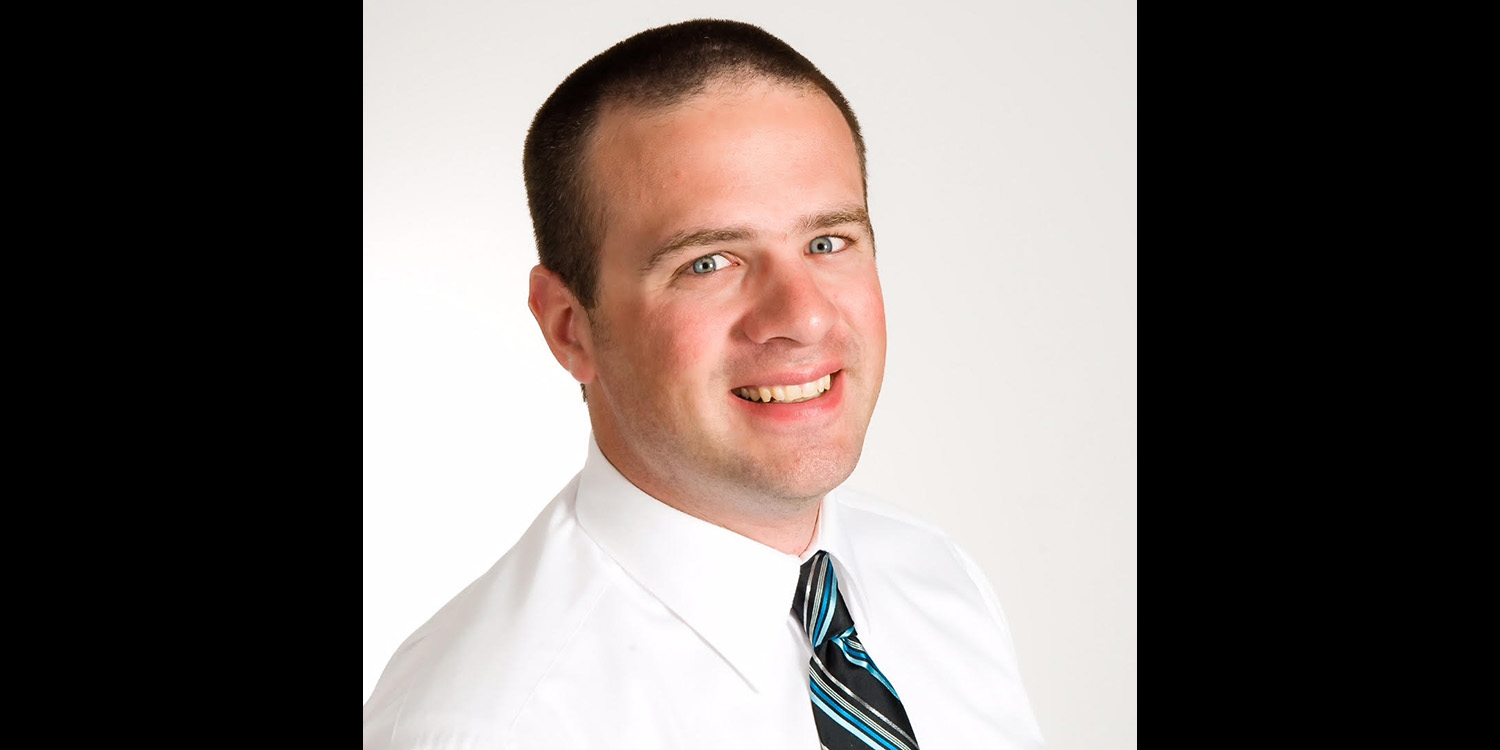
Hesston College announces the hiring of Chris Nachtigall as the Larks’ new athletic director. A 2001 graduate of Hesston College, Nachtigall holds a bachelor’s degree in sports management from Iowa Wesleyan College (Mount Pleasant, Iowa) and a master’s in coaching and athletic administration from Concordia University (Irvine, Calif.).
While at Hesston, Nachtigall played baseball and soccer. “One thing I loved about my experience as an athlete at Hesston was that I could also be involved in many other things,” said Nachtigall. “I got to lead as a resident assistant and be involved in campus worship and intramurals. The experience helped shape me into a well-rounded leader on and off the field. It is what excites me about being back at Hesston – giving unique opportunities to develop young people into leaders.”
Nachtigall’s professional journey includes work as a program director, physical education teacher and high school basketball and softball coach. In 2007, he became the athletic director at Iowa Mennonite School (Kalona), overseeing the school’s 12 varsity sports while also coaching. In 2011 he moved to Northwestern College (Orange City, Iowa) to become the head softball coach. During his tenure, the Red Raiders won three conference championships and Nachtigall earned a Great Plains Athletic Conference Coach of the Year award.
Nachtigall brings a family with him to Hesston – wife Marena, also a 2001 Hesston College graduate, and their three kids – son Cohen (9), and daughters Eden (6) and Ayla (3).
“Hesston College holds a special place in our families’ hearts,” said Nachtigall. “Hesston helped to mold and shape both Marena and me. We are thrilled to be moving back to a place we hold dearly.
“I am humbled for the opportunity to be the next Hesston College athletic director,” Nachtigall said. “We want to continue what has been started by building a culture of excellence that encompasses all of Hesston College Athletics. I am looking forward to stepping into those shoes.”
Hesston College is a college of the Mennonite Church USA. The Larks compete in 14 intercollegiate sports as part of the Kansas Jayhawk Community College Conference and the National Junior College Athletic Association.

Annual race tradition to feature a participant challenge for 2018 event
General
Hesston College will host its annual two-mile run/walk, The Manickam Mosey, at 10:30 a.m., Saturday, Sept. 29, during a weekend of community-wide homecoming events. The 2018 event will feature an Alumni/Community vs. Students Challenge, with the group producing the largest number of race participants laying claim to the first Manickam Mosey Challenge Trophy Cup.
The Manickam Mosey, which is named in honor of Hesston College President Dr. Joseph A. Manickam, is a tradition in its twenty-seventh year. The event gives alumni visiting the college for homecoming weekend an opportunity to be active along with students and community members while enjoying the picturesque Hesston College campus and neighboring Dyck Arboretum of the Plains.
Participants who register by Sept. 20 will pay an early entry fee of $16, which includes a race shirt and number. Starting Sept. 21, registration will be $22. Registration can be completed online.
Medals will be given to overall and age group winners, along with a chance to win door prizes.
New faculty and staff join community
General
Hesston College announces the following new faculty and staff appointments for the 2018-19 year:
- Mike Baker, director of Aviation, is a 1993 Hesston College graduate and holds a master’s in business administration from Tabor College – Wichita (Kan.) and a bachelor’s of science – professional pilot from Utah Valley State College (Orem).
- Travis Bunk, nursing professor, holds a bachelor of science in nursing degree from Wichita (Kan.) State University, and is expected to complete a master of science in nursing education degree from Wichita State in 2020.
- Casey Cole, Student Success faculty and assistant volleyball coach, holds a master’s degree in management from Southern Nazarene University (Bethany, Okla.) and a bachelor’s in business and sports management from Southeastern University (Lakeland, Fla.).
- Tim Cole, baseball coach, holds a master of arts in sports management and administration and a bachelor of arts in kinesiology from Southern Nazarene University and an associate of arts in physical education teaching and coaching from Labette Community College (Parsons, Kan.).
- Will Friesen, chemistry professor, holds a Ph.D. in analytical chemistry and mass spectrometry from the State University of New York at Buffalo and a bachelor’s degree in chemistry from Tabor College (Hillsboro, Kan.).
- Marilyn Galliardt, food service.
- Chase Glaum, visiting communications professor and assistant baseball coach, holds a master’s degree in exercise science and health promotion from California University of Pennsylvania and a bachelor of arts in speech communication from Southern Nazarene University.
- Erin Hershberger, nursing professor, is a 2010 Hesston College graduate and holds a bachelor of science in nursing degree from Tabor College. She is pursuing a master’s degree in nursing education from Wichita State University.
- Sandra Hiebert, registrar and dean of assessment and accreditation, holds a master of arts in public affairs from the University of Minnesota (Minneapolis) and a bachelor’s degree from Kansas State University (Manhattan).
- Chandra Johnson, Intensive English Program director, holds a master’s degree in TESOL from Fresno (Calif.) Pacific University and a bachelor’s degree in English from Tabor College.
- Nick Ladd, Bible professor, is a 2014 Hesston College graduate and holds a master’s degree in elementary education from Grand Valley State University (Allendale, Mich.).
- Carla Lahey, theatre professor and Campus Activities Board director, holds a master’s degree in theatre education from Florida State University (Tallahassee) and is a completing a Ph.D. through Louisiana State University (Baton Rouge).
- Megan Leary, mathematics professor, holds a master of science degree in mathematics from the University of Oklahoma (Norman) and a bachelor’s degree from Bethel College (North Newton).
- Collin Loutensock, athletic administrative assistant, intramural director and athletics events manager (volleyball and basketball), is a 2016 Hesston College graduate and holds a bachelor’s degree in sports communication from Newman University (Wichita, Kan.).
- Serena Lytle, assistant athletic trainer, holds a master’s degree from Missouri Baptist University (St. Louis).
- Kristi Martin, nursing professor, holds a master of science in nursing education from Fort Hays (Kan.) State University and a bachelor of science in nursing degree from Regis University (Denver, Colo.).
- Morgan Martin, admissions counselor, is a 2014 Hesston College graduate.
- Michelle Miller Sharp, athletics compliance and eligibility specialist, is a 1974 Hesston College graduate and earned a physician assistant degree from Alderson Broaddus University (Phillippi, W.V.) and a bachelor’s degree from Goshen (Ind.) College.
- Colby Moritz, database and systems administrator.
- Chris Nachtigall, athletic director, is a 2001 Hesston College graduate and holds a master’s in coaching and athletic administration from Concordia University (Irvine, Calif.) and a bachelor’s degree in sports management from Iowa Wesleyan College (Mount Pleasant).
- Lorren Oesch, women’s resident director, is a 2015 Hesston College graduate and holds a bachelor’s degree in peacebuilding from Eastern Mennonite University (Harrisonburg, Va.).
- Lois O’Malley, adjunct Spanish professor, holds a Ph.D. in foreign language acquisition from Kansas State University and master’s degrees in Spanish education and young adult pastoral ministry, and a graduate certificate in spiritual direction.
- Carla Proctor, preschool teacher, holds a bachelor’s degree in elementary education from Dordt College (Sioux Center, Iowa).
- Kelsay Rychener, adjunct communications professor, holds a master’s degree in communications from Wichita State University.
- Jessica Schmidt, social work professor, holds a master’s degree from Newman University.
- Eric Schwab, cross country coach, holds a master’s degree from Azusa (Calif.) Pacific University.
- Dan Sigley, head athletic trainer, holds a doctor of athletic training degree from the University of Idaho (Moscow) and a bachelor’s degree in athletic training from Tabor College.
- Stephanie Taylor, food service.
- Jon Tumblin, men’s resident director, holds a bachelor of arts in recreation management and youth ministry from Bluffton (Ohio) University.
Newton High School students learn to be good leaders
General
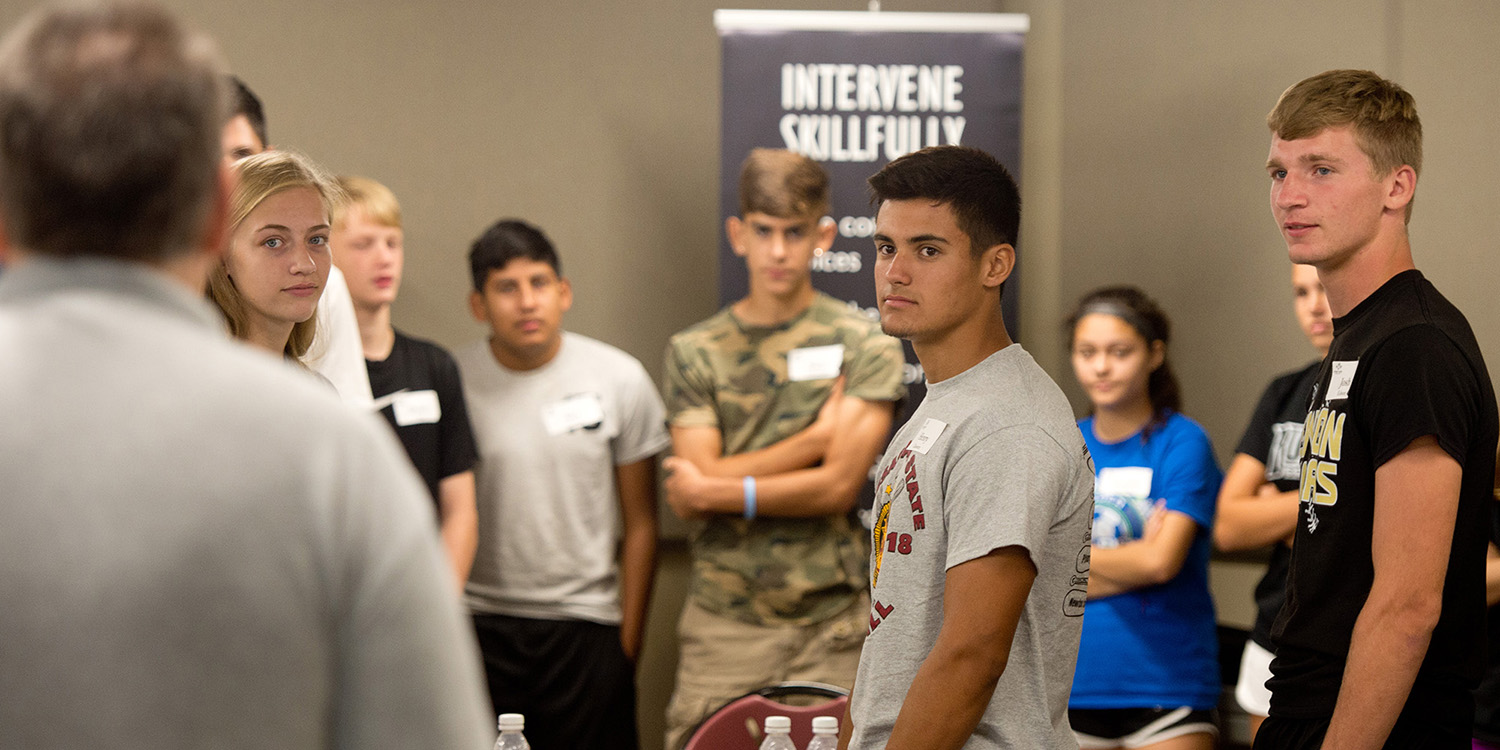
On August 1 and 2, 50 Newton (Kan.) High School (NHS) student-athletes and coaches took a break from their summer break to learn how to be good leaders among their peers by participating in the Hesston College Leadership Academy.
Drawing on leadership competencies outlined by the Kansas Leadership Center (Wichita) as well as the expertise of the Hesston College faculty and staff who lead the training programs, the training was customized to address challenges and areas for change identified at NHS.
“Our purpose in providing this training to these students was to create advanced leadership skills in some of our athletes so they can have a lasting impact on their teams, their peers and Newton High,” said Mark George, social studies teacher and head baseball coach at NHS.
In the two half-day sessions, the students learned to become more in tune with their strengths and vulnerabilities as well as their personality and conflict styles, thereby becoming more effective leaders.
“It’s been a really positive experience,” said George. “It’s giving these students the tools they need to model good leadership to their peers. It’s also been refreshing for them, because some of the things they already knew or recognized in themselves, but this gives them a common vocabulary to be able to talk about it and put it into practice. They are gaining confidence as leaders so they won’t feel intimidated when they are asked to lead.”
“The training has helped me learn more about myself, and knowing yourself first is really beneficial in being able to help others,” said Maggie Remsberg, who will soon start her senior year. “The skills I have to take away from this will help me be a leader for success on my volleyball and track and field teams, but also just in doing the right thing and being a good example to my peers in all areas of school.”
George says the six NHS coaches who attended the leadership training along with the 44 students plan to continue meeting with the group throughout the school year to encourage one another in their leadership roles, show support as they work through challenging situations and give another level of accountability.
“I’m excited we were able to work with the high school demographic and find ways to help them work intentionally toward a positive culture across the Newton High student body,” said Rachel Swartzendruber Miller, Hesston College Leadership Training Program co-creator and vice president of Admissions and Financial Aid.
Hesston College started the customizable leadership training program in summer 2017 for schools and companies looking to addresses their specific adaptive challenges. Excel Industries (Hesston) was the first company to send employees for leadership training, with a cohort of 26 going through the program in July 2017 followed by another Excel cohort of 39 in December 2017.
Schools or companies interested in offering the training to their students or employees can contact Swartzendruber Miller at rachelsm@hesston.edu or 620-327-8206.
42 Larks named to NJCAA All-Academic Teams
General
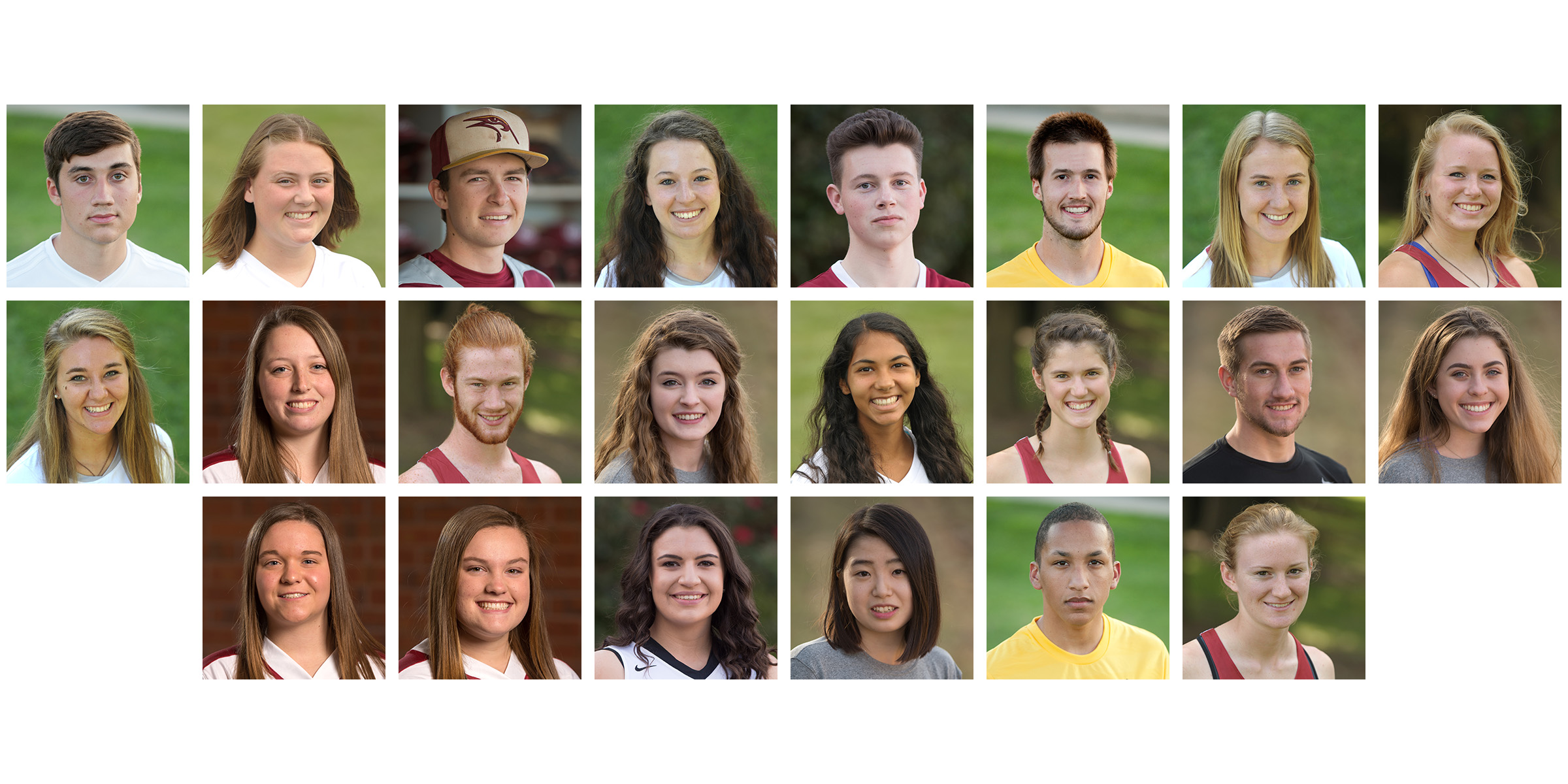
The Hesston College athletic department announces that 42 student-athletes have been named National Junior College Athletic Association Academic All-Americans. To be an All-American a student needs to complete a minimum of 24 credits over the two semester school year. The 42 student-athletes represents 24% of Hesston’s total athletes on campus. Congratulations to the following students:
Named to the first team with a GPA of 4.0 were Landon Baer (North Lima, Ohio), men’s soccer; Jenna Boller (Kalona, Iowa), women’s soccer; Jeremy Deckinger (Wichita, Kan.), baseball; Jade Gleason (Brush, Colo.), volleyball; Cal Hartley (Benton, Kan.), men’s basketball; Luke Hertzler (Harrisonburg, Va.) men’s soccer; Kylee Kasselman (Claflin, Kan.), volleyball; Kate Kilmer (Goshen, Ind.), women’s cross country; Cassidy King (Cochranville, Pa.), volleyball; Kaylen Lassley (Salina, Kan.), softball; Levi Litwiller (Hopedale, Ill.), men’s cross country; Nicole Loewen (Hutchinson, Kan.), women’s tennis; Taylor Longenecker (Harrisonburg, Va.), men’s track and field; Faith Manickam (Hesston, Kan.), women’s soccer; Elizabeth Miller (Archbold, Ohio), women’s cross country; Rio Mori (Osaka, Japan), women’s tennis; Curtis Oesch (Caldwell, Idaho), men’s tennis; Hannah Rosenbaum (Richmond, Texas), women’s tennis; Jaelyn Rufenacht (Pettisville, Ohio), softball; Jenna Schneider (Lodi, Calif.), softball; Morgan Sterner (Lehi, Utah), women’s basketball; Harune Suzuki (Osaka, Japan), women’s tennis; Bryson White (Fort Worth, Texas), men’s soccer; and Sadie Winter (Newton, Kan.), women’s cross country.
Named to the All-Academic Second Team with a GPA of 3.80 to 3.99 were Sam Amarante (Lodi, Calif.), softball; Kenzie Brown (Estes Park, Colo.), women’s soccer; Andre Eanes (Harrisonburg, Va.) men’s cross country; Faith Hallmark (El Dorado, Kan.), volleyball; Zac Neely (Ada, Okla.), men’s basketball; Caitlyn Nichols (Mesa, Colo.), women’s basketball; and Payton Yehnert (Parker, Colo.) women’s soccer.
Named to the All-Academic Third Team with a GPA of 3.60 to 3.79 were Alexis Avalos (Yucaipa, Calif.), softball; Savannah Bontrager (Milford, Neb.), women’s cross country; Sierra Broce (Goddard, Kan.), women’s cross country; Annalys Hanna (Fraser, Colo.), volleyball; Jacob Harris (El Paso, Texas), baseball; Shaelyn Headrick (La Junta, Colo.), women’s basketball; Preston Judd (Hayden, Ala.), baseball; Kaede Nakada (Tokyo, Japan), women’s tennis; Miho Okuda (Chiba-ken, Japan), women’s soccer; Haley Unruh (Wilmore, Kan.), volleyball; and Lindsey Yoder (Millersburg, Ohio), women’s soccer.
Scholarship honors overseas service
General
A new institutional scholarship that honors the legacy of longtime Hesston College supporters Arnold and Wilmetta Dietzel has been added to the college’s more than 100 available endowed scholarships. The scholarship was established with estate funds the Dietzels designated for Hesston College.
After graduating from Hesston Academy in 1940, Wilmetta studied for one year at Hesston College before transferring to La Junta (Colo.) Nursing School, where she earned her registered nurse (RN) degree. The Dietzels met in 1944 when they both attended a training session for people considering foreign mission work. Arnold had served in Civilian Public Service during World War II, and in 1946 he signed on as a “seagoing cowboy” to deliver horses to Poland to help farmers recover from the devastation of the war. As soon as Arnold was discharged, the couple married in the Hesston College chapel.
In their first year of marriage, Arnold taught business courses at Hesston College and worked on the construction of Hess Hall. He also started soccer for students, using a cow pasture for a soccer field.
But the couple knew their calling was for overseas church work.
From 1948 to 1953, the Dietzels served at a leprosy colony in India under the Mennonite Board of Missions and Charities (now known as Mennonite Mission Network). Arnold was the superintendent of the Shantipur leprosy hospital and homes, and Wilmetta was nursing supervisor for the medical dispensary.
After spending three years in the United States where Arnold again taught at Hesston College, he was hired by Mennonite Central Committee (MCC) to work in the department called Menno Travel Service (MTS). This appointment launched a long career in the travel industry with a focus on making travel arrangements for MCC and church service workers. In 1957, the family moved to an MTS office in Beirut, Lebanon, which turned into five years of living in the Middle East, during which time Wilmetta also became an MCC/MTS employee, specializing in Holy Land tours.
When the Dietzel family returned to the United States in the early 1960s, they settled in Newton, Kan., where both Arnold and Wilmetta continued to work for MTS until their retirement in 1988. They spent their final years at Schowalter Villa in Hesston, where Arnold died in 2014 and Wilmetta in 2016.
Intended recipients of the Wilmetta D. (Weaver) and Arnold J. Dietzel Scholarship will be international students from countries where the Dietzel’s served and had connections throughout their lifetimes, or students with a strong interest in becoming a service worker with a Mennonite Church organization.
Additional contributions to The Wilmetta D. (Weaver) and Arnold J. Dietzel Scholarship may be made by contacting the Hesston College Advancement Office at 866-437-7866 or online. When doing so, please note the gift’s intention in the memo field.
To discuss ways to support Hesston College with a legacy gift, contact Vice President of Advancement Byron Rupp, J.D., at byron.rupp@hesston.edu.
2018-19 year to start with Opening Weekend activities
General
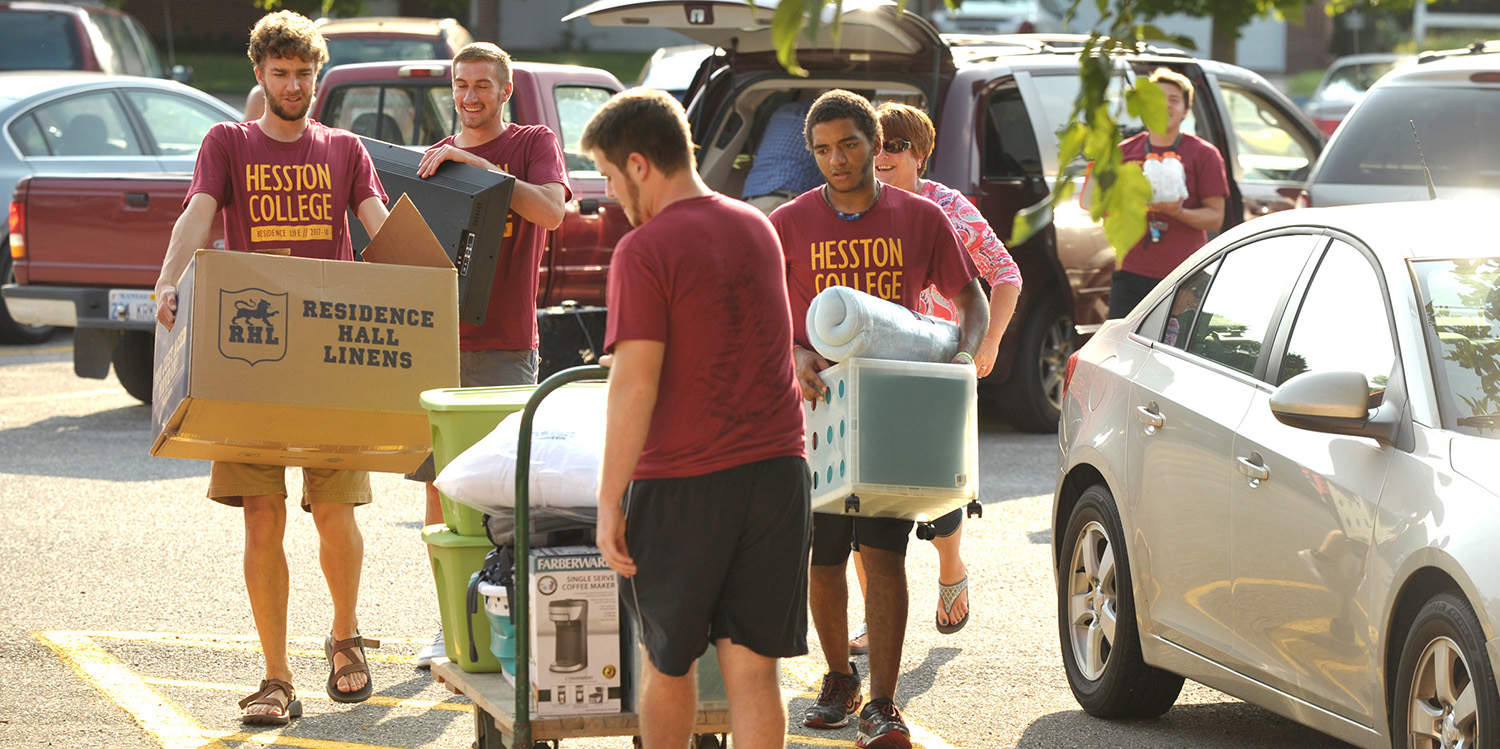
The summer lull on the Hesston College campus will soon come to an end as students arrive for the 2018-19 year, which launches with Opening Weekend activities August 17 to 19, and the first day of the fall term on August 20.
Community members are welcome to join the campus community for several weekend community-building activities, including:
- Opening Celebration, 8 p.m., Friday, Aug. 17, Hesston Mennonite Church
- Maroon and Gold volleyball scrimmage, 4:30 p.m., Saturday, Aug. 18, Yost Center
- Opening Worship with the Hesston Mennonite congregation, 10:30 a.m., Sunday, Aug. 19, Hesston Mennonite Church
- Mod Olympics, 6:45 p.m., Aug. 19, Hesston College soccer field, which features on-campus students competing in their mod groups in lighthearted games that promote community and new friendships
See the full Opening Weekend schedule.
Those interested in keeping up to date with on- and off-campus college events and activities, can see or subscribe to a public events calendar.
One campus event of note for the 2018-19 year is Homecoming Weekend, Sept. 27 to 30. The weekend will feature a celebration of 60 years of Lark intercollegiate athletics, including:
- The attendance of Evan Oswald, “father of Hesston College Athletics”
- Launch of a Hesston College Athletic Hall of Fame
- Homecoming Golf Benefit Register
- Recognition of Kansas City General Hospital/Hesston College alumni
- Manickam Mosey Two-Mile Run/Walk Register
- Kids Festival and free community picnic meal
- The Steel Wheels concert, a leading American folk music group from the Blue Ridge Mountains of Virginia. Buy tickets through the Hesston College Bookstore in person or online.
See a full Homecoming Weekend schedule.